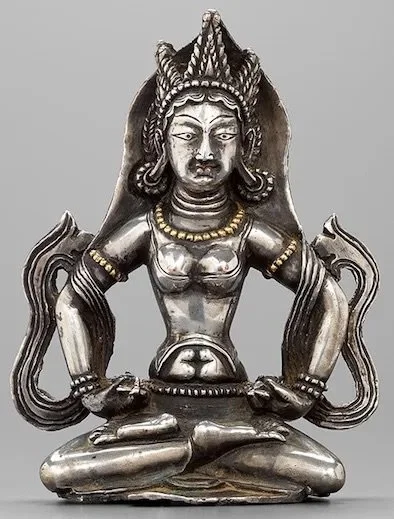
Vajralasya in India
11th century, Vajralasya, Kashmir, silver with gold inlay, private collection, photo on Tenzing Asian Art
It is Undás, Kalag-Kalag in the Visayas. Day of the Dead, All Souls, All Saints, the tail end of the Hungry Ghosts thinning of the veil during this time of the year, it’s all related. It’s a time for ordinary, everyday people to nurture their relationships to their beloved ancestors and unknown ancestors, to remember our multidimensional world together.
This might be a rambling post since I walked away from academic writing long ago and after so many visions I no longer feel human. I don’t edit much these days, I just kinda move on. These are just my thoughts.
As someone firmly rooted in the movement towards collective liberation of the working-class, the homeless, the disabled, the incarcerated, the colonized and marginalized, I placed on my altar the organizers and artists screaming for human rights who have died in this long fight. I watch around me as we are worked to death, our comrades dying young, our Land paved over and littered with tourist trash, but our communities still selling t-shirts about adobo and making books about Kapwa. We have forgotten our ancestor’s ways, the ways of fighters, farmers, artisans, seers. We have been so colonized that we do not know when it is time to tear down the systems that harm our parents and grandparents or our ancestor the Land. We don’t know when it is time to react or how to react to the factors, to the oppressors and our apathetic family members, that brought us to this moment in imperialist, fascist history. So many of us have become class traitors or upper-class wannabes who turn their backs on the poor and bend the knee to wannabe kings and enslavers.
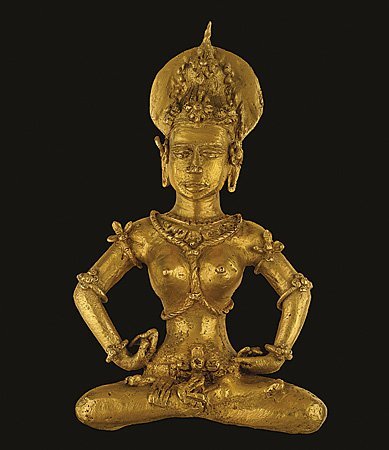
I have heard the music and rhythms of the Gandharvas while in a trance or while in intense pain. I have heard them singing, making music, dancing, while we suffer here in our realm. Vajralasya above, is one of these Gandharvas and serves as an offering deity within the Diamond Realm, a dimension that is beyond most human understandings of energy, technology, sentience. In Tantric tradition, Gandharvas are often feminine and Vajralasya is the offering goddess of amorous dance. Gandharvas can appear as patterns of light or even humanoids to us but they are actually disembodied, their forms beyond our everyday comprehension. Unless one is a seer, a philosopher, a Tantric yogini, a guru, a sadhu, a devout person or possibly a quantum physicist or sci-fi geek then one might struggle to fathom this idea and we would resort to explaining it within the limitations of human speech and human art.
Many people hear music when they die (per reports of many survivors of near-death experiences). Modern, materialist science would try to make sense of this phenomena with explanations about our dying nervous system, the brain’s perception of its own shutting-down, hallucinations, and so forth. Except, not everyone hears music. Some people hear a condemning voice that tells them specific details about their life. Some hear a terrifying silence. Others hear ancestors like parents and grandparents guiding them away from their bodies.
𖤓ૐ
Last month, I enjoyed the offering of Budhi Budaya: Buddhist Consciousness in Ancient Pre-Philippines by Kalami Spirit Arts. She and her guest Jacob offered information on historical Hindu-Buddhist artifacts found in the Philippines, including the Golden Agusan image. Khokoi is a generous teacher, and I wish more folks had her manner of teaching from the ground-up and not from the ivory tower-down.
Learning from lay people and some gurus in the West, for some of the time on this spiritual path in the diaspora, often felt like a huge trap filled with patriarchal methodologies and patriarchal language that, in general, keeps working-class people out of true dharmic spiritual practice. For much of the education that is available to Asians in the West, one will find surface-level, introductory seminars and talks that are always told with a huge dose of Western coddling, a watered-down version of Buddhism that is less syncretic and more colonized. The Buddhist author Chenxing Han writes much more eloquently about this than I ever could. Here in the West, so many people feel entitled to Tantra and secret teachings, entitled to become ninja and guru for these other Westerners who barely care about the state of the world. Also, the linear and academic way that most of us in the community approach these topics feels incomplete for my brain. I do not have the same knowledge as all educators but I do have an above-average comprehension of imagination and creativity as nervous system tools for accessing higher states of consciousness.
At some of these community events, online and in-person, I can pick up on other people in the room feeling lost when spiritual teachers or researchers discuss abstract concepts and rituals, but these people go along anyway hoping they will one day grasp what was shared. Unfortunately, the real consequence of feeling lost nearly all the time is a lack of growth, plateaus that feel impossible to get around. The confusion and mental limbo of other attendees at these events becomes a psychic distraction for me. Workshops, seminars, public talks with teachers often feels this way though I very much appreciate other Filipina educators and researchers along the path. Meeting other real yoginis has forced this linear, patriarchal academic learning out of my way, though it is an important aspect of each of our educations and human edification.
I can sense what is missing from a given talk in real time, for example, the relevant connections we need to make together, logically, before discussing abstract and highly conceptual imagery to folks who are barely practicing animists, Sanatanis, Buddhists, artists. The general public can barely understand paintings on our streets or in our museums let alone the conceptual paintings of the ancient Tantric practitioners. This isn’t a dig on people. This is an old critique of the absence of matriarchal teaching and arts education. We don’t just need folks to understand color theory; this goes beyond academic approaches and takes a sharp U-turn back hundreds of years, towards slow, integrated, bodily learning— the Autistic way.
Folks need a contemplative arts engagement blended with academic arts-learning that meets them at their level, before they can grasp some of these other ideas like magic mantras and offering deities, which is what Vajralasya is. Some folks need connections to their own traumatized bodies (including epigenetic and intergenerational trauma) to even see that they might have a material body interwoven with contaminated consciousness that is sifted from pure consciousness. Some folks have to connect with their own bodies and realize they likely aren’t healers, that healing is a sacred and difficult path that must be honored if they even want to come close to the dharma. Some folks have to realize that there are people naturally gifted but harmed by these oppressive, abusive systems like capitalism because their sensitivity is a disability in this country, yet White folks and rich Tagalogs are out here practicing the suppressed peoples’ healing arts. There are healers out there who don’t have hilot certifications and don’t need them because they have a connection to the Source via their own bodies. So many folks don’t understand their own bodies and their relationship to tradition, so how could they possibly understand the sacred, secret teachings.
At some of these teaching events, I think breaking down ideas as simply as we can, moving slowly, while aiming to build the more complex elements slowly over time is the old way, the sage’s way, and not the capitalist’s way. We must build the neural pathways, strengthen the nervous system, for some of this spiritual information to be helpful at all. It also helps filter out those who want to make a quick buck or be cool (an epidemic in the USA) from those who are on a more meaningful path.
Arts education has been ripped away from many communities and it surely isn’t encouraged in many areas of public life. The arts and spiritual practice go hand-in-hand and cannot be removed from each other. They developed together: painting, poetry, geometry, math, dance, sculpture, architecture, musical instruments, all the tools of our pre-colonial and animist cultures.
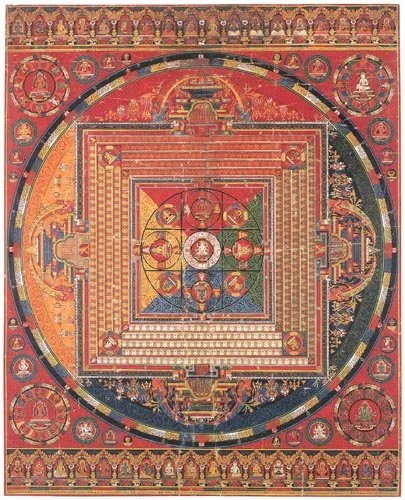
Mandala of the Diamond Realm
This was shared at the workshop but I sensed that few people understood and that’s okay. This image is based on the Sarva Tathagata Tattva Samgraha Tantra, a text translated into Tibetan by Rinchen Sangpo (958-1055). As you can see this image is not easy to understand. It’s challenging for a lot of folks to look at this image on a 2D plane and understand that it is a multi-dimensional self-contained ship, planet, realm. A 3D model would be helpful to attempt to explain this thing that does not exist in our perceived reality. At the center is the god Vairocana, a force that helps intelligently bind together the teachings and teachers of this Tantric lineage. The four Tathagatas (enlightened, ancient ones that were once embodied) are at the centers of the four adjacent circles: Akshobhya in the east, Ratnasambhava in the south, Amitabha in the west, and Amoghasiddhi in the north.
More on the image above: Tathagatas are not ‘original’ creator gods but they do emanate other beings like wrathful deities, teaching deities, bodhisattvas. The emanations are like advanced, energetic clones but each clone is an aspect of the Prime. Each is surrounded by four attendants, also enlightened but not as powerful. In four circles marking the intermediate points of the compass are four goddesses associated with offerings: Vajramala (southwest; garland), Vajragita (northwest; song), Vajranrtya (northeast; dance), and Vajralasya (southeast; amorous dance). Four further offering goddesses appear at the corners of the second, larger court: Vajrapuspa (southwest; flower), Vajradipa (northwest; lamp), Vajragandha (northeast; perfume), and Vajradhupa (southeast; incense). Each quadrant contains two hundred and fifty bodhisattvas who are associated with the Tathagata presiding over each of the four cardinal directions. The Vajralasya found in the Philippines was likely part of a very large set of beautifully crafted statues.
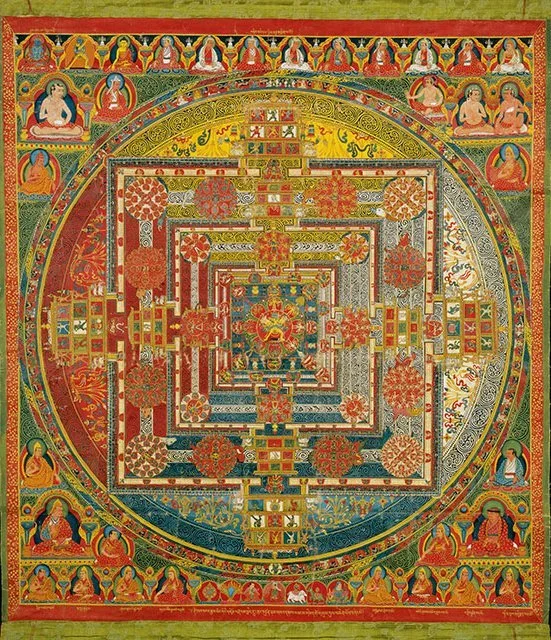
Mandala Depicting Kalachakra and Vishvamata, Tibet, first half 16th Century.
Above: Here is another mandala depicting a similar concept. This is the Kalachakra that helps describe our dimension of space-time within the greater ultimate reality outside of space-time, the complex relationships between deities, planets, stars and the subtle energies of our human bodies, aka astrology.

This is the completed Kalachakra sand mandala, a 2D sand illustration made by hand by the Dalai Lama, photo taken at an angle, constructed during the 33rd Kalachakra Empowerment in Leh, Ladakh, J&K, India in July of 2014. (Photo by Tenzin Choejor/OHHDL)
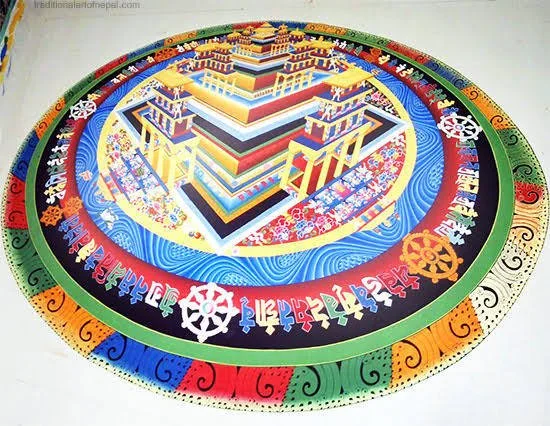
The mandala rendered on a 2D plane using 3D perspective.
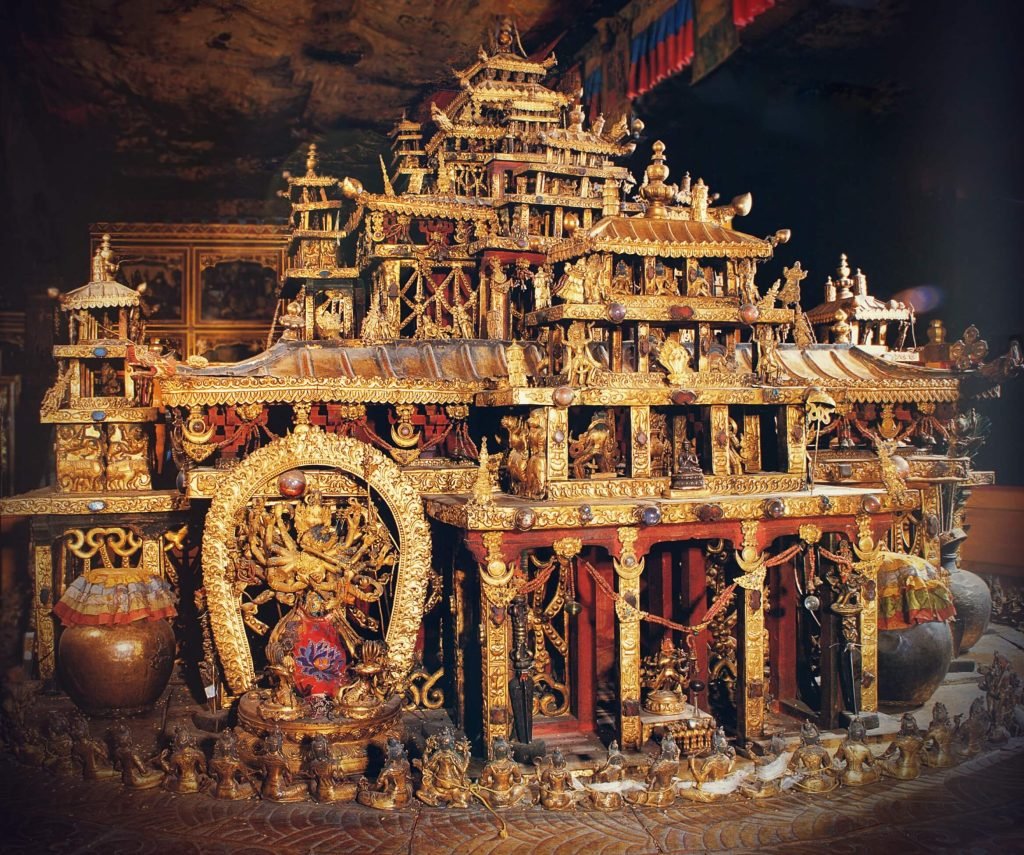
Three-dimensional Kalachakra mandala at the Potala Palace, Tibet, Jerome Ryan/Mountains of Travel Photos.
This is the Kalachakra. It can be interpreted as an ancient, visual list that organizes the teachings of Buddhist astrology. The Diamond Realm can be a visual list that describes the body of Vajrayana teachings. All mandalas can be abhorrently oversimplified as depictions of abstract ideas, philosophies, science. As a seer, however, I know that these mandalas appeared as patterns of light, shape, sound and that the high seers of Tantric Buddhism were then able to instantaneously understand astrology, dharma, enlightenment. These seers know how to use this futuristic or advanced technology. These shapes and mandalas must be uncovered and revealed by a lineage of Tantric practitioners, the wisdom earned, the dimensions accessed from within, with a controlled nervous system.
Ancient people knew that some spirits went to realms that were different from others. We knew it had something to do with matter, electrons, magnetism, waves, properties of light and sound. We knew that our actions on earth had real-life correlations to matter and energy. Our ancient ancestors knew that there were beings in some of these ‘after-life’ realms making noise— in fact, we could categorize and name the beings. They aren’t just metaphors or symbols. We knew that several realms were made of pure sound— we could draw them, map them out.
The ancients uncovered these sacred wisdoms and then documented them exactly how they were instructed by deities and englightened beings. They depicted patterns, color, sounds through music, painting, sand, engravings, carvings, dance. It requires high literacy of the arts to embody the teachings of Tantra. Spirituality, art, and science developed together. These mandala images are sacred and their true uses secret, only passed along to worthy gurus, yoginis, and sadhus of Vajrayana. I also interpret mandalas as encoded shapes, colors, patterns that convey information about the many processes of awakening. They are tools. When you have taken countless actions, acquired and distributed merit, reached high states of meditation, made routine offerings to the deities along the perimeter, then you spiritually and mentally reach the wisdom found in the inner circles of the ‘temple’. The Diamond Realm is specific to Vajrayana (Tantric Buddhist) lineages.
Although most of us do not have access to Tantric uses of mandalas, and shouldn’t, some of us folks can access other bits of less complex information using related approaches, ie your everyday medium like a mother who can tell that you’re going to get into a car accident on a particular day after she perceived a pattern in a bowl of rice grains. Another example would be some authentic Vedic astrologers who can do rituals and connect with information in the ether to make sense of planetary bodies and their effect on our subtle human energies.
In Sanatana Dharma (‘Hinduism’) the transmissions come from the Sun, or another star-like vehicle, and its emanations (ie, the goddess Aditi and all her emanations like Surya and Savitur), or the encoded messages in the sunlight, personified as Gayatri. A relatively modern example of someone we all know who was able to hear these encoded messages was Nikola Tesla who wrote about receiving transmissions from light. The Sanatani explanations of receiving intelligent wisdom from sunlight isn’t merely a version of The Diamond Realm, it’s a completely different way to access support on one’s path. There are many ancient beings that want to help us and many ancient technologies available to those who are worthy (strengthened and purified in mind, body, spirit).
The Diamond Realm is less scary and mystical when we attempt to fathom how old the cosmos is, when we accept that there are advanced beings who try to help lower, newer beings around town (because there are also other advanced beings, who are not so kind, who trap us in technological loops that we can’t fathom without specific language and literacy that goes beyond words). What does this have to do with Undás?
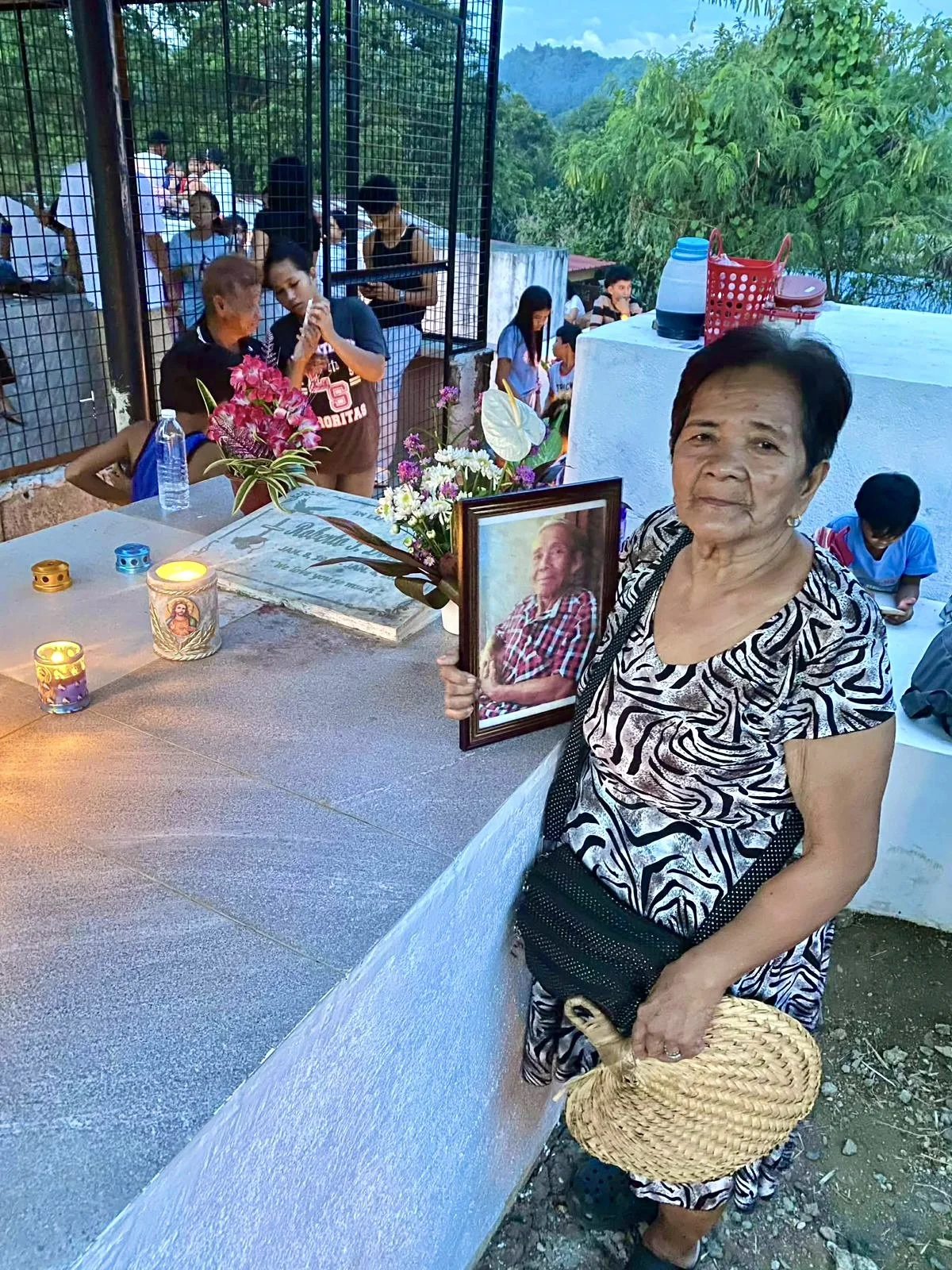
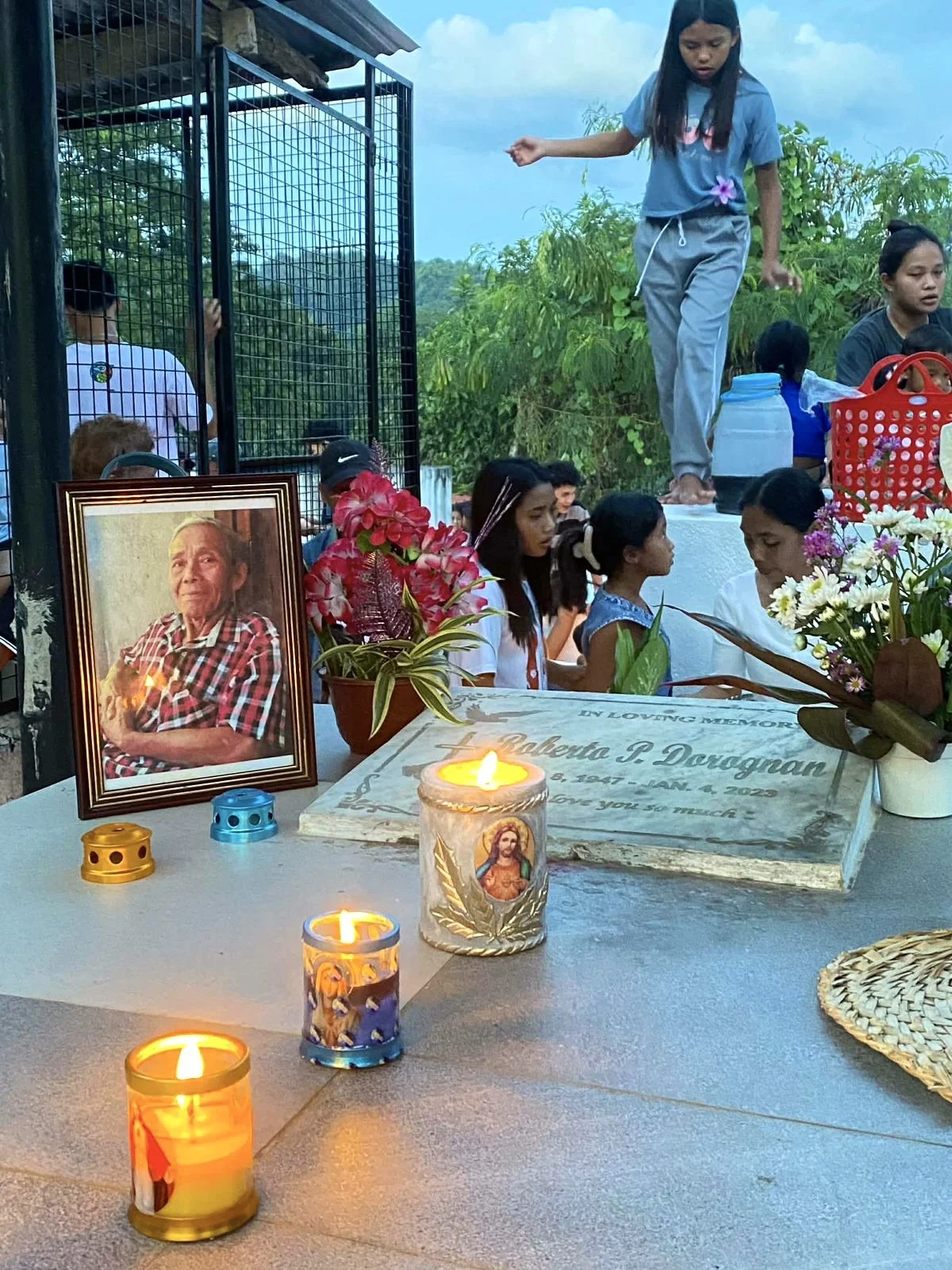
My Nanay visiting my Tatay on Undás this weekend.
Leading up to All Soul’s and All Saint’s days, my nephews and nieces cleaned and painted my father’s grave. On the day of, my mother and whole family brought food, alcohol, drinks, candles, flowers to my father’s grave.
My Tatay, my birth father, died from tuberculosis a couple of years ago. Just before he died he heard music and also spoke to his deceased mother above, and saw a river behind her. The sounds he heard were Gandharvas, not his own brain firing off comforting sensations. The image of his mother and the river were not hallucinations. When one meditates ‘high’ enough, they can pierce the membrane of this stretch of our reality, our dimension. On the other side is a river— a flowing body of water.
In our pre-Catholic Visayan culture, deities like Magwayen would take our spirits to the underworld, or the next realm, via a river. Around August-November each year, the membranes between realms “thins” and it becomes easier for spirits to communicate with non-mediums. The living make offerings that are related to the senses not because they are symbolic but because our senses are gateways that can share with spirits information beyond their realms: beautiful flowers that are also delicately scented, white paint for mourning and purification, light for warmth and guidance, water to wash, and alcohol to appease the spirits, incense or tobacco smoke, songs and prayers for sound. When my mother sways, longing for her dear husband to visit her, asking God to allow this, her hips gently moving to a mournful song, she is performing an amorous dance, an offering as symbolized by Vajralasya. Movement is an offering that pleases the higher beings and it is a form of communication that pierces the membranes of reality.
To understand how I work within Tantra is to understand how I confront difficult situations, how I ask the uncomfortable questions, and then pursue painful, necessary change: Why did my father get tuberculosis and die of it when most of the West rarely sees deaths associated with it in modern times? Why did my father lack opportunities to get better healthcare and work opportunities? Why did my father have to work a dangerous job as a fisherman despite being so sick that he could barely stand? Why is the poverty so rampant in the Philippines and what are the histories that led to this moment? What contributes to the corruption? How to we in the West contribute to this corruption? How have we, immigrants in the West, neglected to make true change in our communities back home?
And then when we get to the answers we are then faced with the unfortunate truths of racism, internalized racism, capitalization and exploitation, classism. Then, our relationships start falling apart because we notice that few people in our families care about fixing problems back home, that they are just happy they escaped or never had to endure the poverty and corruption. They don’t want the embarrassment of being associated with the poor but they benefit from the cultures that come from historically disenfranchised groups. They don’t even read the news because it makes them ‘anxious’ and they have no idea how to make change in their own lives. They can’t even imagine breaking out of this owner-worker system, they just want to get good at playing the game. We start to see that apathetic people are corrupted people who are actually dangerous to others. Tantra peels back the layers and supports the pain as the transitions occur, as the spirit breaks free from conditioning of the body and brave goddesses emerge from our actions.
We, in many diasporic Filipino communities, don’t have many real gurus to tell us that we are trapped but we also don’t have many real practitioners who want to be liberated. In order for more of us to explore Tantra we would have to allow ourselves to go deeper than commercializing what we have learned. This information is so private and sacred that we cannot afford to kill the wisdom before it has a chance to spread through oral transmission. Some of our wisdom is only for a select few of us to protect it from being appropriated and misused by ill-intended people. Not all of us have to be hilots. We need to purify by being active in our communities and become worthy to attain this information.
Working with people of all ages I have noticed a loss in our younger generations, but they aren’t entirely to blame. It’s a loss of grit and bravery that helped other generations survive. The younger generation has their intelligence and passion, their social connections through technology but they suffer a loss of thinking like dangerous artists, thinking like warriors of the mind and spirit. I have also noticed people of older generations who aspire to join white society, to get the benefits that America has to offer the elite at the top. There’s a loss of identity and it’s a part of the theme of this planet.
Image this planet, as we are experiencing it together now, is a game. It’s a program set to suffering, the hardest level. The further away a player gets from their roots the further they get from recognizing that they are inside of a game. Those who face the systems in place to look at the root of suffering will notice that they are inside of a game. Only those who notice will have an opportunity to get out of the game that causes them so much suffering. Guess who are the NPCs, non-players, who know some of this information? Our ancestors, our spirit guides, our own spirits and their friends, the Light, the Land. Make our amorous dances, our offerings, actions in our families and global communities, keep making offerings within our bodily capacities (our disabled friends including myself operate at our limits every day), an outward pouring of ourselves like a giant, self-fueled being, again and again. Standing by justice and working towards collective liberation are purifying acts for our energetic body. It’s a life-long exercise.
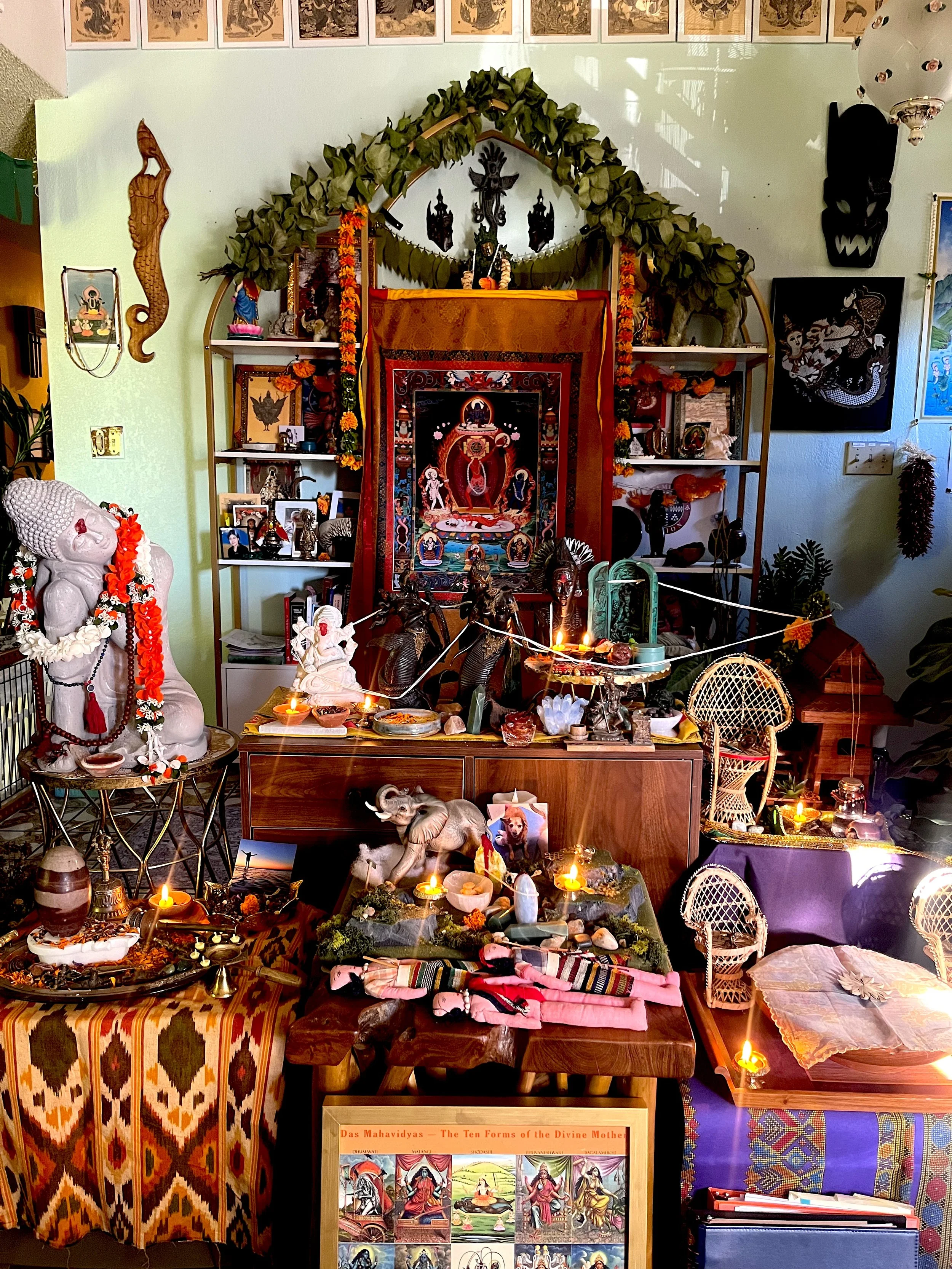
Cavern House shrine preparations for Undas.
My research is backwards: I started having visions of suffering as a child, including visions of some of my own past lives. I went searching for answers about the visions in books and in people. It nearly drove me insane because my nervous system couldn’t handle it all without a real guide. The visions included patterns, shapes like circles, orbs, triangles, columns of sound. I became a Buddhist as a child and unknowingly practiced elements of Tantra as though it was all a memory for me. I made an altar when I was very small. Then, before I reached middle school, a guide from another realm started teaching me. I didn’t want to be religious, in fact at the time I was involved with a Filipino gang in the Bay Area, California. But here was this being was, instructing me to 1) not eat meat, 2) be kind to plants and learn how to grow life, 3) speak up with this gift of speech by standing on the side of justice, 4) make honorable decisions that cause the least harm, 5) to remind people about ancestral veneration, 6) to remember our Land and our history, 7) stand up against racism, incarceration, and sexual violence, and so on. These are hard tasks, skills, and ideas for any young person. But they flowed through me like a ghost at every opportunity. I followed these secret instructions and I struggled to survive. Some family members alienated me, found me so annoying that they hated me, though I never preached, only spoke up for animals, children, etc. My caring about the world was corny to them, an embarassment. I was an adopted child with alien blood, as far as they were concerned. Then I found my living gurus and a type of mourning overtook me, a mourning for all the time I spent disliking my strange self and trying to prove to my adoptive family that I was worthy of respect, a mourning for the Self for it starts to disappear, a mourning for all the suffering that I was about to witness in the world with my newly sharpened mind and open third eye.
Getting closer to the dharma and actually living Tantra means breaking open and, in a way, dying. I know that is scary for people and not everyone should take this path. I’ve long ago stopped judging people for not facing their pain and instead began responding with wrathful compassion. I tell them to their face, with all my rage, how it affects others, their apathy. It is scary to face our colonial pasts and our colonized minds. It seems impossible to walk away from our high status jobs and fancy global vacations, our sneaker culture and fast fashion. It is shameful and painful to look at our personal struggles, the struggles of our parents and their parents within this capitalist trap, this imperialist machine, and how all of these past decisions and traumas led to the current suffering of our most vulnerable people: homeless families, working-class folks, disabled people, single mothers, LGBTQ people, and immigrant children from all backgrounds in the USA … our supposed better life, our refuge.
Vajralasya is a symbol, to me, of our instructions for liberation, if our goal is truly liberation and not just the US dollar, the US status and popularity. We have to dance an amorous dance for our Land and our People, we have to make offerings with our minds and our actions, our old selves and old names can die. Let us awaken.
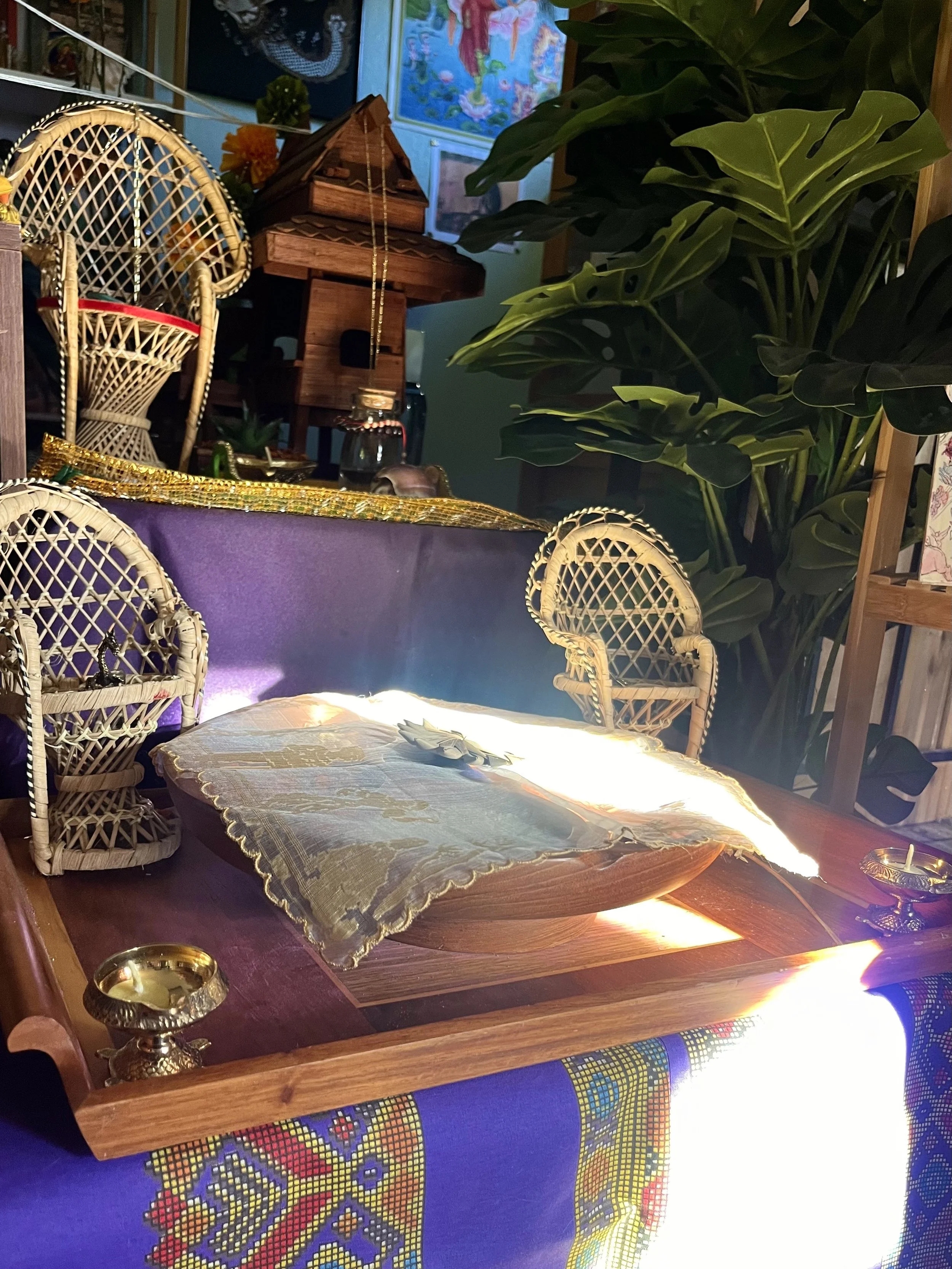
Part of the offerings for Undas. Empty chairs represent guardian ancestors but they also seat their energy to the shrine.
I acquired a lot of my secret knowledge while meditating and making offerings on cemetery grounds under many full moons. I frequented local cemeteries alone and eventually sought them out energetically, traveling from place to place connecting with whatever emanations of Adi Shakti lived in these areas. I look for the demons and death. In this realm I have been saved from incarceration of the mind and body. I have fought demons in this realm and others. I am afraid of nothing because She has taken away my fear.
Om tare tuttare ture svah.
“अ॒हमे॒व वात॑ऽइव॒ प्रवा᳚म्या॒रभ॑माणा॒ भुव॑नानि॒ विश्वा᳚ ।
प॒रो दि॒वा प॒रए॒ना पृ॑थि॒व्यै ताव॑ती महि॒ना सम्ब॑भूव ॥ ८॥
ॐ शान्तिः॒ शान्तिः॒ शान्तिः॑ ॥
I only breathe forth, like the wind, while holding together all living creatures. So great (vast) I have become possessing greatness that I am beyond heaven and this earth.”
༄༅། །རྡོ་རྗེའི་ལྷ་མོ་བཅུ་དྲུག་གི་མཆོད་ཕྲེང་དྲི་ཟའི་རྒྱུད་མང་ཞེས་བྱ་བ་བཞུགས།
The Lute of the Gandharvas
A Garland of Offerings of the Sixteen Vajra Goddesses
by Jigme Lingpa
འཕགས་པ་ཀུན་ཏུ་བཟང་པོ་དང་བྱང་ཆུབ་མཆོད་པའི་ལྷ་མོ་རྣམས་ལ་ཕྱག་འཚལ་ལོ། །
I bow to Ārya Samantabhadra and the enlightened offering goddesses.
རྡོ་རྗེའི་ལྷ་མོ་བཅུ་དྲུག་གི་མཆོད་ཕྲེང་དྲི་ཟའི་རྒྱུད་མང་ནི། མཆོད་རྫས་རྣམས་ལ་བསང་ཆུ་འཐོར་ཞིང༌།
For this offering garland of the Sixteen Vajra Goddesses, “The Lute of the Gandharvas”, bless the offerings by sprinkling them with purifying water and recite:
ཨོཾ་ཧཱུྃ་ཏྲཱཾ་ཧྲཱིཿཨཱཿ
om hung tram hrih ah
oṃ hūṃ trāṃ hrīḥ āḥ
ལྷ་རྫས་དང་ཏིང་ངེ་འཛིན་ལས་གྲུབ་པའི་ཕྱི་ནང་གསང་བའི་མཆོད་སྤྲིན་ངོ་བོ་ཡེ་ཤེས་ཀྱི་བདུད་རྩི་ལ་རྣམ་པ་འདོད་ཡོན་གྱི་སྤྲིན་ཕུང་ཟད་མི་ཤེས་པ་ཀུན་ཏུ་བཟང་པོའི་མཆོད་པའི་རྣམ་རོལ་དུ་རྒྱས་པར་གྱུར་ཅིག
lhadzé dang tingédzin lé drubpé chi nang sangwé chötrin ngowo yeshe kyi dütsi la nampa döyön gyi trinpung zémishepa kuntuzangpö chöpé namrol du gyepar gyur chik
Here are clouds of outer, inner and secret offerings, all created from divine substances and meditation. While their essence is wisdom nectar, they appear as boundless clouds of sensory delights. May they expand and multiply, to match Samantabhadra’s vast display of offerings!
Recite three times:
ན་མཿསརྦ་ཏ་ཐཱ་ག་ཏ་བྷྱོ་བྷི་ཤྭ་མུ་ཁེ་བྷྱཿསརྦ་ཐཱ་ཁཾ་ཨུདྒ་ཏེ་སྥ་ར་ཎ་ཧི་མཾ་ག་ག་ན་ཁཾ་སྭཱ་ཧཱ།
nama sarva tatagaté bayo bisho mukhebé sarva takham udgaté saparana imam gagana kham soha
namaḥ sarvatathāgatebhyo viśvamukhebhyaḥ | sarvathā kham udgate spharaṇa imaṃ gaganakhaṃ svāhā
ལན་གསུམ་བརྗོད།
སྤྲོ་ན་མཆོད་པའི་སྤྲིན་གྱི་གཟུངས་ཀྱང་འདོན།
If you wish, you can recite the Offering Cloud Dhāraṇī at this point:
ན་མོ་རཏྣ་ཏྲ་ཡཱ་ཡ། ན་མོ་བྷ་ག་ཝ་ཏེ། བཛྲ་སཱ་ར་པྲ་མརྡྷ་ནེ། ཏ་ཐཱ་ག་ཏ་ཡ། ཨརྷ་ཏེ་སམྱཀྶཾ་བུདྡྷ་ཡ། ཏདྱ་ཐཱ། ཨོཾ་བཛྲེ་བཛྲེ་མཧཱ་བཛྲེ། མཧཱ་ཏེ་ཛྭ་བཛྲེ། མཧཱ་བིདྱཱ་བཛྲེ། མཧཱ་བོ་དྷི་ཙིཏྟ་བཛྲེ། མཧཱ་བོ་དྷི་མཎྚོ་པ་སཾ་ཀྲ་མ་ཎ་བཛྲེ། སརྦ་ཀརྨ་ཨ་ཝ་ར་ཎ་བི་ཤྭ་དྷ་ན་བཛྲེ་སྭཱཧཱ།
namo ratna trayaya, namo bhagavaté, benza sara pramardhané, tathagataya, arhaté samyak sambuddhaya, teyata, om benzé benzé maha benzé, maha tedzo benzé, maha bidya benzé, maha bodhitsita benzé, maha bodhi mantopa samkramana benzé, sarva karma avarana vishva dhana benzé soha
namo ratna trayāya | namo bhagavate | vajra-sāra-pramardane | tathāgatāyārhate samyak-saṃbhuddhāya | tadyathā | oṃ vajre vajre mahā-vajre | mahā-teja-vajre | mahā-vidyā-vajre | mahābodhicittavajre mahābodhi-maṇḍopasaṃ-kramaṇa-vajre | sarvakarmāvaraṇaviśodhanavajre svāhā
དེ་ནས་དབྱངས་ཤིན་ཏུ་སྙན་པ་དང་བཅས།
Then, in the sweetest melody, recite the following:
པདྨ་རྒྱས་པ་ལྟ་བུའི་ལང་ཚོ་ཅན། །
pema gyepa tabü langtso chen
As fresh and flush with youth as a lotus in full bloom,
རེག་ན་བདེ་བའི་མཆོག་སྟེར་ཨུཏྤལ་མིག །
rek na dewé chok ter utpal mik
At a touch she bestows supreme bliss, her eyes like utpala petals.
གཟུགས་ཀྱི་རྣམ་འགྱུར་ངོམ་པའི་ཡིད་འཕྲོག་མ། །
zuk kyi namgyur ngompé yitrokma
As she moves with the gestures and glances of an enchantress—
རྡོ་རྗེ་སྒེག་མོ་མ་ཡིས་མཉེས་གྱུར་ཅིག །
dorje gekmoma yi nyé gyur chik
May the vajra goddess of beauty bring you delight!
གུ་རུ་སརྦ་ཏ་ཐཱ་ག་ཏ་ས་པཱ་རི་ཝཱ་ར་བཛྲ་ལཱ་སྱེ་ཧཱུྃ་པྲ་ཏཱིཙྪ་ཧོཿ
guru sarva tathagata sapariwara benza lasyé hung pratitsa ho
guru sarva-tathāgata saparivāra vajra-lāsye hūṃ pratīccha hoḥ
སྲིད་ན་རྣམ་པར་མཛེས་པའི་ཟླ་བས་ཀྱང༌། །
si na nampar dzepé dawé kyang
Not even the moon, most beautiful sight in this world,
བལྟ་ན་སྡུག་པའི་གཟུགས་ཀྱི་ཆར་མི་ཉེ། །
tanadukpé zuk kyi char mi nyé
Can come close to this vision of loveliness,
ནོར་བུའི་དོ་ཤལ་འཛིན་པའི་ཡིད་འོང་མ། །
norbü doshal dzinpé yi ong ma
Ravishing as she holds out a necklace of jewels—
རྡོ་རྗེ་ཕྲེང་བ་མ་ཡིས་མཉེས་གྱུར་ཅིག །
dorje trengwama yi nyé gyur chik
May the vajra goddess of garlands fill you with joy!
གུ་རུ་སརྦ་ཏ་ཐཱ་ག་ཏ་ས་པཱ་རི་ཝཱ་ར་བཛྲ་མཱ་ལྱེ་ཏྲཱཾ་པྲ་ཏཱིཙྪ་ཧོཿ
guru sarva tathagata sapariwara benza malyé tram pratitsa ho
guru sarva-tathāgata saparivāra vajra-mālye trāṃ pratīccha hoḥ
འཇམ་མཉེན་པུནྡ་རི་ཀའི་ལང་ཚོ་ལ། །
jam nyen pundariké langtso la
They’re as tender and supple as a pristine white lotus,
རེག་འཇམ་དབང་པོའི་གཞུ་ཡི་འཁྲི་ཤིང་ཅན། །
rek jam wangpö zhu yi trishing chen
Soft to the touch and with trailing vines of rainbow;
སྐད་སྙན་འགྱུར་ཁུགས་སྟོང་གི་གླུ་ལེན་མ། །
ké nyen gyurkhuk tong gi lulenma
Their sweet voices sing a thousand melodies—
རྡོ་རྗེ་གླུ་མའི་ཚོགས་ཀྱིས་མཉེས་གྱུར་ཅིག །
dorje lumé tsok kyi nyé gyur chik
May all these vajra goddesses of song delight you!
གུ་རུ་སརྦ་ཏ་ཐཱ་ག་ཏ་ས་པཱ་རི་ཝཱ་ར་བཛྲ་གཱིརྟི་ཧྲཱིཿཔྲ་ཏཱིཙྪ་ཧོཿ
guru sarva tathagata sapariwara benza girti hrih pratitsa ho
guru sarva-tathāgata saparivāra vajra-gīte hrīḥ pratīccha hoḥ
བུང་བ་པདྨའི་ཚལ་ན་གཡོ་བ་བཞིན། །
bungwa pemé tsal na yowa zhin
Agleam with bands of turquoise and gold, their hands and feet
ཕྱག་ཞབས་གསེར་གཡུའི་གདུ་བུས་མཛེས་པའི་གར། །
chak zhab ser yü dubü dzepé gar
Move like honeybees swooping through a glade of flowers
མིག་འཕྲུལ་ལྟ་བུར་བསྒྱུར་བའི་གཡོ་ལྡན་མ། །
miktrul tabur gyurwé yoden ma
As they dance in beauty, swirling into a magical apparition—
རྡོ་རྗེ་གར་མའི་ཚོགས་ཀྱིས་མཉེས་གྱུར་ཅིག །
dorje garmé tsok kyi nyé gyur chik
May the vajra goddesses of dance all steep you in glee.
གུ་རུ་སརྦ་ཏ་ཐཱ་ག་ཏ་ས་པཱ་རི་ཝཱ་ར་བཛྲ་ནཱིརྟི་ཨཱཿཔྲ་ཏཱིཙྪ་ཧོཿ
guru sarva tathagata sapariwara benza nirti ah pratitsa ho
guru sarva-tathāgata saparivāra vajra-nṛtye āḥ pratīccha hoḥ
བཅུ་དྲུག་ལོང་ཚོས་མྱོས་པའི་རྣམ་འགྱུར་དེས། །
chudruk longtsö nyöpé namgyur dé
Oozing with the vivacity of a sixteen year old,
སྙིང་ལ་དགའ་བའི་ཡ་མཚན་ཅིར་ཡང་སྟེར། །
nying la gawé yatsen chiryang ter
She thrills the heart with every kind of unimaginable joy.
དྲི་ཞིམ་སྤོས་ཕོར་ཐོགས་པའི་སྨིན་ལེགས་མ། །
drizhim pöpor tokpé minlekma
This gorgeous maiden, she offers a vase of fragrant incense—
རྡོ་རྗེ་བདུག་སྤོས་མ་ཡིས་མཉེས་གྱུར་ཅིག །
dorje dukpöma yi nyé gyur chik
May the vajra incense goddess envelop you in delight.
གུ་རུ་སརྦ་ཏ་ཐཱ་ག་ཏ་ས་པཱ་རི་ཝཱ་ར་བཛྲ་དྷཱུ་པེ་ཧཱུྃ་པྲ་ཏཱིཙྪ་ཧོཿ
guru sarva tathagata sapariwara benza dhupé hung pratitsa ho
guru sarva-tathāgata saparivāra vajra-dhupe hūṃ pratīccha hoḥ
ཚངས་དབང་འཆི་མེད་བུ་མོའི་འཇོ་སྒེག་ཀྱང༌། །
tsang wang chimé bumö jogek kyang
Even the charms of Lord Brahma’s immortal daughters
ཤིན་ཏུ་མཛེས་པའི་ལང་ཚོས་བརྟན་པ་འཕྲོག །
shintu dzepé langtsö tenpa trok
Are put to shame by her soaring, youthful beauty.
ཨུ་དུམ་ཝཱ་རའི་ཆུན་འཕྱང་ཡིད་འཕྲོག་མ། །
udumwaré chün chang yitrokma
She holds you spellbound with her cascade of uḍumbara blossoms—
རྡོ་རྗེ་མེ་ཏོག་མ་ཡིས་མཉེས་གྱུར་ཅིག །
dorje metokma yi nyé gyur chik
May the vajra flower goddess gladden your heart.
གུ་རུ་སརྦ་ཏ་ཐཱ་ག་ཏ་ས་པཱ་རི་ཝཱ་ར་བཛྲ་པུཥྤེ་ཏྲཱཾ་པྲ་ཏཱིཙྪ་ཧོཿ
guru sarva tathagata sapariwara benza pupé tram pratitsa ho
guru sarva-tathāgata saparivāra vajra-pūṣpe trāṃ pratīccha hoḥ
ཡིད་འོང་བལྟ་ན་སྡུག་པའི་མཁུར་ཚོས་ལ། །
yi ong tanadukpé khurtsö la
Her cheeks, so fair, so lovely to behold, are tinged
ལི་ཁྲིའི་ཐིག་ལེས་བསྐུས་པའི་རི་དྭགས་མིག །
litri tiklé küpé ridak mik
With circles of sindūra, her eyes like those of a gazelle,
ཉི་ཟླའི་སྒྲོན་མེ་ཐོགས་པའི་བཞིན་བཟང་མ། །
nyidé drönmé tokpé zhinzangma
That exquisite face lit by lamps of sun and moon—
རྡོ་རྗེ་སྣང་གསལ་མ་ཡིས་མཉེས་གྱུར་ཅིག །
dorje nangsalma yi nyé gyur chik
May the vajra lamp goddess fire you with joy.
གུ་རུ་སརྦ་ཏ་ཐཱ་ག་ཏ་ས་པཱ་རི་ཝཱ་ར་བཛྲ་ཨཱ་ལོ་ཀེ་ཧྲཱིཿཔྲ་ཏཱིཙྪ་ཧོཿ
guru sarva tathagata sapariwara benza aloké hrih pratitsa ho
guru sarva-tathāgata saparivāra vajra-āloke hrīḥ pratīccha hoḥ
འཆི་མེད་བུ་མོའི་དཔལ་འཛིན་སྨིན་ལེགས་གཟུགས། །
chimé bumö pal dzin min lek zuk
With her shapely figure, as heavenly as an immortal goddess,
ཞལ་ནས་ཨུཏྤལ་ལ་ཡི་དྲི་འཐུལ་ཞིང༌། །
zhal né utpalla yi dri tul zhing
The sweet scent of utpala on her breath, she diffuses
བཟང་དྲུག་སྨན་གྱི་བྱུག་པས་དགྱེས་པ་སྐོང༌། །
zangdruk men gyi jukpé gyepa kong
Delight with blends of the six healing ingredients—
རྡོ་རྗེ་དྲི་ཆབ་མ་ཡིས་མཉེས་གྱུར་ཅིག །
dorje drichabma yi nyé gyur chik
May this vajra perfume goddess grant you every happiness!
གུ་རུ་སརྦ་ཏ་ཐཱ་ག་ཏ་ས་པཱ་རི་ཝཱ་ར་བཛྲ་གནྡྷེ་ཨཱཿཔྲ་ཏཱིཙྪ་ཧོཿ
guru sarva tathagata sapariwara benza gendhé ah pratitsa ho
guru sarva-tathāgata saparivāra vajra-gandhe āḥ pratīccha hoḥ
ལང་ཚོའི་ཆ་ཤས་རྫོགས་པའི་པདྨ་དང༌། །
langtsö chashé dzokpé pema dang
Her beauty is like a lotus, with every shade of youthfulness,
རྣམ་འགྱུར་ཅིར་ཡང་འཆར་བའི་ཨ་དརྴ། །
namgyur chiryang charwé adarsha
Her expressions like a mirror, reflecting anything that can be,
ཕན་ཚུན་འགྲན་པ་ལྟ་བུའི་གཟུགས་མཛེས་མ། །
pentsün drenpa tabü zukdzéma
And of these two which is greater, when so lovely is her form?
རྡོ་རྗེ་མེ་ལོང་མ་ཡིས་མཉེས་གྱུར་ཅིག །
dorje melongma yi nyé gyur chik
May the vajra mirror goddess bring you only joy.
གུ་རུ་སརྦ་ཏ་ཐཱ་ག་ཏ་ས་པཱ་རི་ཝཱ་ར་བཛྲ་རཱུ་པ་ཨོཾ་པྲ་ཏཱིཙྪ་ཧོཿ
guru sarva tathagata sapariwara benza rupa om pratitsa ho
guru sarva-tathāgata saparivāra vajra-rūpe oṃ pratīccha hoḥ
ཏིང་འཛིན་རི་མོ་མཁན་གྱིས་བྲིས་པའི་གཟུགས། །
tingdzin rimo khen gyi dripé zuk
Her body seems as if drawn by an artist in deep samādhi;
བཞིན་མཛེས་མནྡ་ར་བས་ཐོད་བཅིངས་ཅན། །
zhin dzé mendarawé tö chingchen
Her gorgeous face beneath its crown of mandāravā flowers,
ཟླུམ་པོའི་རྔ་ལས་བདེ་སྟོང་སྒྲ་འབྱིན་མ། །
dumpö nga lé detong drajinma
She coaxes from her drum the sounds of bliss and emptiness—
རྡོ་རྗེ་རྔ་ཟླུམ་མ་ཡིས་མཉེས་གྱུར་ཅིག །
dorje ngaduma yi nyé gyur chik
May the vajra goddess with the round drum delight you!
གུ་རུ་སརྦ་ཏ་ཐཱ་ག་ཏ་ས་པཱ་རི་ཝཱ་ར་བཛྲ་མྲྀ་ཏཾ་གི་ཧྲཱིཿཔྲ་ཏཱིཙྪ་ཧོཿ
guru sarva tathagata sapariwara benza mirtangi hrih pratitsa ho
guru sarva-tathāgata saparivāra vajra-mṛdaṅge hrīḥ pratīccha hoḥ
རཏྣའི་སོར་གདུབ་འཁྲོལ་བའི་ཁུ་ཚུར་གྱིས། །
ratné sordub trolwé khutsur gyi
Jewelled rings on her fingers jingle
དྲི་ཟའི་བུ་མོར་འགྲན་པའི་ཏམ་བུ་ར། །
drizé bumor drenpé tambura
As she rivals even the gandharvas’ daughters,
རྣ་བའི་དཔྱིད་དུ་སྦྲེངས་པའི་ཡིད་འཕྲོག་མ། །
nawé chi du drengpé yitrokma
Playing her lute to delight the ears and enthral the mind—
རྡོ་རྗེ་པི་ཝང་མ་ཡིས་མཉེས་གྱུར་ཅིག །
dorje piwangma yi nyé gyur chik
May the vajra lute goddess captivate and please you!
གུ་རུ་སརྦ་ཏ་ཐཱ་ག་ཏ་ས་པཱ་རི་ཝཱ་ར་བཛྲ་ཝིི་ནི་ཧཱུྃ་པྲ་ཏཱིཙྪ་ཧོཿ
guru sarva tathagata sapariwara benza wini hung pratitsa ho
guru sarva-tathāgata saparivāra vajra-vīṇe hūṃ pratīccha hoḥ
དགའ་བ་བཅུ་དྲུག་རླུང་གི་རྟར་བསྐྱོན་ནས། །
gawa chudruk lung gi tar kyön né
Mounted on the winds of the sixteen joys,
ཐིག་ལེ་བཅུ་དྲུག་གནས་སུ་དག་པ་ལས། །
tiklé chudruk né su dakpa lé
The sixteen subtle drops find their natural purity,
སྟོང་ཉིད་བཅུ་དྲུག་གླིང་བུའི་སྒྲར་སྟོན་པའི། །
tongnyi chudruk lingbü drar tönpé
And in the notes of her flute sixteen kinds of emptiness are revealed—
རྡོ་རྗེ་གླིང་བུ་མ་ཡིས་མཉེས་གྱུར་ཅིག །
dorje lingbuma yi nyé gyur chik
May the vajra flute goddess draw you into a rapture of delight!
གུ་རུ་སརྦ་ཏ་ཐཱ་ག་ཏ་ས་པཱ་རི་ཝཱ་ར་བཛྲ་ཝཾ་སེ་ཏྲཱཾ་པྲ་ཏཱིཙྪ་ཧོཿ
guru sarva tathagata sapariwara benza wamsé tram pratitsa ho
guru sarva-tathāgata saparivāra vajra-vaṃśe trāṃ pratīccha hoḥ
ཟླ་གཞོན་པད་དཀར་ལྟ་བུའི་ལང་ཚོའི་དཔལ། །
da zhön pekar tabü langtsö pal
As glorious as a dazzling moon or pure white lotus,
མིག་གི་བདུད་རྩིར་སྦྱིན་དང་ཆབས་ཅིག་པར། །
mik gi dütsir jin dang chabchikpar
A maiden gorgeous to look upon, who all the while
སྙན་འགྱུར་རྫ་རྔའི་སྒྲ་སྒྲོགས་ན་ཆུང་མ། །
nyen gyur dzangé dra drok nachungma
Plays rhythms on her clay-drum so sweet to hear—
རྡོ་རྗེ་རྫ་རྔ་མ་ཡིས་མཉེས་གྱུར་ཅིག །
dorje dzangama yi nyé gyur chik
May the vajra clay-drum goddess fill you with gladness!
གུ་རུ་སརྦ་ཏ་ཐཱ་ག་ཏ་ས་པཱ་རི་ཝཱ་ར་བཛྲ་མུ་རཉྫེ་ཨཱཿཔྲ་ཏཱིཙྪ་ཧོཿ
guru sarva tathagata sapariwara benza murandzé ah pratitsa ho
guru sarva-tathāgata saparivāra vajra-muraje āḥ pratīccha hoḥ
སྟོང་ཉིད་ནམ་མཁའི་རྒྱན་གྱུར་ལྷ་ཡི་གོས། །
tongnyi namkhé gyen gyur lha yi gö
The raiment of the gods that adorns the sky of emptiness,
རིན་ཐང་བརྗོད་དུ་མེད་པའི་པཉྩ་ལི། །
rintang jödu mépé pentsali
Precious beyond words, the sublime pāñcālika silk
འཕྲུལ་ལྡན་སོར་རྩེས་སྒྲོན་པའི་མཛའ་ན་མོ། །
trulden sor tsé drönpé dzanamo
Is offered by this delectable lady, draped over her magical fingertips—
རྡོ་རྗེ་རེག་བྱ་མ་ཡིས་མཉེས་གྱུར་ཅིག །
dorje rekjama yi nyé gyur chik
May the vajra goddess of touch charge you with joy!
གུ་རུ་སརྦ་ཏ་ཐཱ་ག་ཏ་ས་པཱ་རི་ཝཱ་ར་བཛྲ་སྤརྴེ་ཏྲཱཾ་པྲ་ཏཱིཙྪ་ཧོཿ
guru sarva tathagata sapariwara benza saparshé tram pratitsa ho
guru sarva-tathāgata saparivāra vajra-sparśe trāṃ pratīccha hoḥ
ཆགས་མེད་ཆགས་པ་ཆེན་པོའི་ཟུར་མིག་གིས། །
chakmé chakpa chenpö zurmik gi
Her sidelong glances of intense desire, free of any clinging,
དཔའ་བོའི་ཡིད་ལ་མྱོས་པའི་ཆོམ་རྐུན་འཇུག །
pawö yi la nyöpé chomkün juk
Slip in like thieves to make even warriors lose their minds.
ལག་ན་རོ་བརྒྱའི་དཔལ་འཛིན་ཞལ་ཟས་ཐོགས། །
lak naro gyé pal dzin zhalzé tok
In her hands delicious foods with a hundred flavours—
རྡོ་རྗེ་རོ་མའི་ཚོགས་ཀྱིས་མཉེས་གྱུར་ཅིག །
dorje romé tsok kyi nyé gyur chik
May the vajra goddess of taste offer you every satisfaction!
གུ་རུ་སརྦ་ཏ་ཐཱ་ག་ཏ་ས་པཱ་རི་ཝཱ་ར་བཛྲ་རཱ་ས་ཧྲཱིཿཔྲ་ཏཱིཙྪ་ཧོཿ
guru sarva tathagata sapariwara benza rasa hrih pratitsa ho
guru sarva-tathāgata saparivāra vajra-rāse hrīḥ pratīccha hoḥ
བདེ་བས་བདེ་བའི་མཐར་སོན་སྟོང་པ་ཉིད། །
dewé dewé tarsön tongpanyi
The perfection of bliss through bliss is emptiness,
བདེ་ཆེན་ཆོས་ཀྱི་འབྱུང་གནས་མངལ་ཁུར་ཅན། །
dechen chö kyi jungné ngal khurchen
And the lotus, source of great bliss, belongs to this mother-consort
བདེ་སྟོང་ངང་ལས་རྒྱལ་ཀུན་བསྐྱེད་པའི་ཡུམ། །
detong ngang lé gyal kün kyepé yum
Who gives birth to all buddhas by means of bliss and emptiness—
ཆོས་ཀྱི་རྡོ་རྗེ་མ་ཡིས་མཉེས་གྱུར་ཅིག །
chö kyi dorjema yi nyé gyur chik
May the vajra goddess of the dharmadhātu delight you!
གུ་རུ་སརྦ་ཏ་ཐཱ་ག་ཏ་ས་པཱ་རི་ཝཱ་ར་བཛྲ་དྷརྨཱ་དྷརྟུ་ཨཱཿཔྲ་ཏཱིཙྪ་ཧོཿ
guru sarva tathagata sapariwara benza dharmadhatu ah pratitsa ho
guru sarva-tathāgata saparivāra vajra-dharmadhāto āḥ pratīccha hoḥ
དེ་ལྟར་ཤིན་ཏུ་རྨད་དུ་བྱུང་བ་རྡོ་རྗེའི་ལྷ་མོ་བཅུ་དྲུག་ལ་ནང་གསེས་ཀྱིས་དབྱེ་ན། ཕྱི་སྒེག་བཞི། ནང་སྒེག་བཞི། སྐུ་གསུང་ཐུགས་ཡོན་ཏན་ཕྲིན་ལས་ཏེ་གསང་བའི་རིག་མ་ལྔ་ཐུན་མོང་འདོད་ཡོན་གྱི་ལྷ་མོ་གསུམ་སྟེ་དེ་ཉིད་རྣམ་པ་བཅུ་དྲུག་གི་རང་བཞིན་དུ་བསྙད་པ་ལས།
When we categorize the sixteen exquisite vajra goddesses, there are four outer beauties, four inner beauties, five secret consorts related to body, speech, mind, qualities and activity, and three common goddesses of the senses. Here are the mudrās that relate to each of the sixteen:
དང་པོ་ཕྱི་སྒེག་བཞིའི་ཕྱག་རྒྱ་ནི།
1. The mudrās of the four outer beauties
བཛྲ་ལཱ་སྱེ་ལ་རྡོ་རྗེ་ཁུ་ཚུར་གཉིས་དཀུར་བརྟེན་ནས་གཡོན་དུ་ཅུང་ཟད་འགྱིང་བའོ། །
For Vajra-Lāsyā, rest your two vajra-fists on your hips and gracefully incline your torso slightly to the left.
བཛྲ་མཱ་ལྱེ་ལ་རྡོ་རྗེ་ཐལ་མོ་གཉིས་ནང་ནས་ཐུར་ལྡོག་གཡོ་བས་ཕྲེང་བ་འདོགས་པའི་ཚུལ་ལོ། །
For Vajra-Mālyā, move your two vajra-palms downwards, then raise them up, as if lifting up a garland.
བཛྲ་གཱིརྟི་ནི་གླུ་མ་སྟེ། གླུ་མའི་ཕྱག་མཚན་པི་ཝང་ཡིན་པས་དེ་ཉིད་སྦྲེང་བའི་ཚུལ་འོག་ནས་འབྱུང་ངོ༌། །
Vajra-Gītā is the singer, and since the singer’s attribute is a lute, the mudrā depicts the playing of a lute, which is described below.
བཛྲ་ནཱིརྟི་ནི་རྡོ་རྗེ་ཁུ་ཚུར་གཉིས་ཀྱིས་སྤྱི་བོར་གར་བྱེད་པའི་ཚུལ་ལོ། །
For Vajra-Nṛtyā, move your two vajra-fists to the crown of your head, as if performing a dance.
གཉིས་པ་ནང་སྒེག་བཞིའི་ཕྱག་རྒྱ་ནི།
2. The mudrās of the four inner beauties
བཛྲ་དྷཱུ་པེ་ནི་ཐལ་སྦྱར་ཚིགས་པ་བཅག་པ་བདུག་སྤོས་ཀྱི་ཁང་པ་ལྟར་རོ། །
For Vajra-Dhupā, join the palms of the hands with the knuckles bent, making a ‘house of incense’.
བཛྲ་པུཥྤེ་ནི་རྡོ་རྗེ་ཁུ་ཚུར་གཉིས་ཁ་བཀན་ལ་མེ་ཏོག་འཐོར་བའི་ཚུལ་ལོ། །
For Vajra-Pūṣpā, hold your two vajra-fists together facing up, as if about to toss flowers upwards into the air.
བཛྲ་ཨཱ་ལོ་ཀེ་ནི་རྡོ་རྗེ་ཁུ་ཚུར་ལས་མཐེ་བོང་གཉིས་མར་མེ་ལྟར་སྒྲེང་བའོ། །
For Vajra-Alokā, make two vajra-fists, with your thumbs pointing upwards, as if you were holding up two lit lamps.
བཛྲ་གནྡྷེ་ནི་གཡོན་པའི་མཐེབ་མཛུབ་སྦྱར། གཞན་རྣམས་བརྐྱང་པ་ཁ་བཀན་ཏེ་དུང་ཆོས་ལྟར་བྱས་པའི་སྙིམ་པ་ནས་གཡས་པའི་མཐེབ་མཛུབ་ཀྱིས་དྲིའི་བྱུགས་པ་འགྱེད་པའི་ཚུལ་ལོ། །
For Vajra-Gandhā, the thumb and index finger of the left hand are touching, while the other fingers are extended, pointing upwards, the hand cupped, resembling a conch shell. With the thumb and index finger of the right hand, you make as if sprinkling perfume.
གསུམ་པ་གསང་བའི་རིག་མ་ལྔ་ལས།
3. The mudrās of the five secret consorts
སྐུའི་རིག་མ་བཛྲ་རཱུ་པ་ནི་གཡོན་པའི་ཁུ་ཚུར་གྱི་སྟེང་དུ། གཡས་པའི་ཐལ་མོ་སྙིང་ག་ནས་ཕྱིར་བསྟན་པ་མེ་ལོང་ལྟར་བྱའོ། །
For the consort of enlightened body, Vajra-Rūpā, the left hand forms a fist, and above it, the right hand is held at the level of the heart with the palm facing outwards, representing a mirror.
གསུང་གི་རིག་མ་བཛྲ་མྲྀ་ཏཾ་གི་ནི་རྔ་ཟླུམ་བརྡུང་བ་ལྟར་གཡོན་པ་ཅུང་ཟད་གྱེན་ལ་ཕྱོགས་གཡས་པའི་སོར་མོ་རྣམས་གཡོབ་པའོ། །
For the consort of enlightened speech, Vajra Mṛdaṅgā, as if playing the round drum, the left hand is held upright, with the fingers of the right hand tapping against the palm.
ཐུགས་ཀྱི་རིག་མ་བཛྲ་ཝི་ནིའི་ཕྱག་རྒྱ་ནི། པི་ཝང་སྒྲེང་བ་ལྟར་གཡོན་གྱེན་དུ་སྒྲེང་བའི་མཐེ་བོང་གིས་གུང་སྲིན་མནན་ཏེ་མཛུབ་མོ་དང༌། མཐེའུ་ཆུང་བརྐྱང༌། གཡས་པའང་དེ་བཞིན་བྱས་པས་སྒྲེང་བའོ། །
The mudrā of the consort of enlightened mind, Vajra-Vīṇā, resembles playing a lute. The left hand faces upwards, with the thumb pressing the middle and ring finger, and index and little finger extended. The right hand is held in the same position, but as if plucking the lute strings.
ཡོན་ཏན་གྱི་རིག་མ་བཛྲ་ཝཾ་སེ་ཏྲཱཾ་ནི་གླིང་བུ་འབུད་པའི་ཕྱག་རྒྱ་ཉིད་ཁའི་མདུན་ན་བྱེད་པའོ། །
For the consort of enlightened qualities, Vajra-Vaṃśā, (trāṃ), form the mudrā of playing the flute at the level of your heart.
ཕྲིན་ལས་ཀྱི་རིག་མ་བཛྲ་མུ་རཉྫེ་ནི་ལག་པ་གཉིས་ཀ་སྙིང་ཁའི་ཐད་ནས་ཁ་ཕྱིར་བསྟན་ལ་སོར་མོ་རྣམས་གཡོབ་པས་རྫ་རྔ་བརྡུང་བ་ལྟར་བྱེད་པའོ། །
For the consort of enlightened activities, Vajra-Murajā, hold both your hands in front of your heart, facing outwards, and drum with your fingers, like playing the clay drum.
བཞི་པ་ཐུན་མོང་འདོད་ཡོན་གྱི་ལྷ་མོ་གསུམ་ལས།
4. The mudrās of the three common goddesses of the senses
བཛྲ་སྤརྴེ་ནི་ལག་པ་གཉིས་སོ་སོའི་མཐེབ་མཛུབ་གུང་སྲིན་རྣམས་རྩེ་སྤྲད། མཐེའུ་ཆུང་སྒྲེང་ལ་གོས་དབུལ་བའི་ཚུལ་ལོ། །
For Vajra-Sparśā, touch the tips of the thumbs and middle and ring finger of each hand. The little fingers are raised, as if presenting the cloth.
བཛྲ་རཱ་ས་ནི་རྡོ་རྗེ་ཐལ་མོ་ཁ་སྦུབས་ལ། བརྐྱང་བ་སླར་གྱེན་དུ་ལྡོག་པ་བཤོས་འདེགས་པའི་ཚུལ་ལོ། །
For Vajra-Rāsā, let your vajra-palms fold downwards and then, with the fingers stretched, lift them up, as if offering food.
བཛྲ་དྷརྨཱ་ནི་མཁའ་དབྱིངས་ཆོས་འབྱུང་གི་ཕྱག་རྒྱ་སྟེ་མཐེ་བོང་གཉིས་རྩེ་སྤྲད། གཞན་རྣམས་བརྐྱང་བའི་སྲིན་ལག་གཉིས་རྩེ་སྤྲད་པའོ། །
For Vajra-Dharmadhātu, make the dharmodaya mudrā with the two thumb tips touching, and all the other fingers stretched out, with the tips of the ring fingers touching.
ཀུན་ལ་པད་སྐོར་གྱིས་སྔོན་བསུས་ནས་རང་སྔགས་དང་ཕྱག་རྒྱ་བསྟུན་ཞིང༌། རྡོ་རྗེ་སེ་གོལ་གཏོགས་པས་བསྣོལ་ཏེ་ནུ་མ་གཡས་གཡོན་གྱི་སྟེང་དུ་འཇོག་པའོ། །
All mudrās need to be preceded by ‘the lotus mudrā’. Mantras and mudrās are performed simultaneously, and then, with crossed arms, perform ‘the vajra finger snaps’, over the right and left side of the chest.
དེ་ལྟར་རྡོ་རྗེའི་རིག་མ་བཅུ་དྲུག་གི །
མཆོད་ཕྲེང་དྲི་ཟའི་བུ་མོས་བླངས་པའི་གླུ། །
རྒྱུད་མང་སྟོང་གི་འགྱུར་དང་ལྡན་པ་འདི། །
ངག་དབང་དབྱངས་ཅན་ལྷ་མོས་བདག་ལ་བྱིན། །ཞེས་སོ།། །།
And so the sixteen vajra consorts’ garland of offerings,
This song of the gandharvas’ daughters
With its strains of a thousand lutes,
Was given to me by the lady of speech, the goddess Sarasvatī.
| Rigpa Translations, 2022. With the kind assistance of Khenchen Pema Sherab, Lama Bhuzin (Tenzin Nyima) Rinpoche and Khenpo Sonam Tsewang.
Source:
'Jigs med gling pa. "rdo rje'i lha mo bcu drug gi mchod phreng dri za'i rgyud mang", in klong chen snying thig rtsa pod. 5 Vols. Bodhnath, Kathmandu and Bodhgaya, Bihar: Shechen Publications, 1994. BDRC W1KG13585. Vol. 2: 579–587.