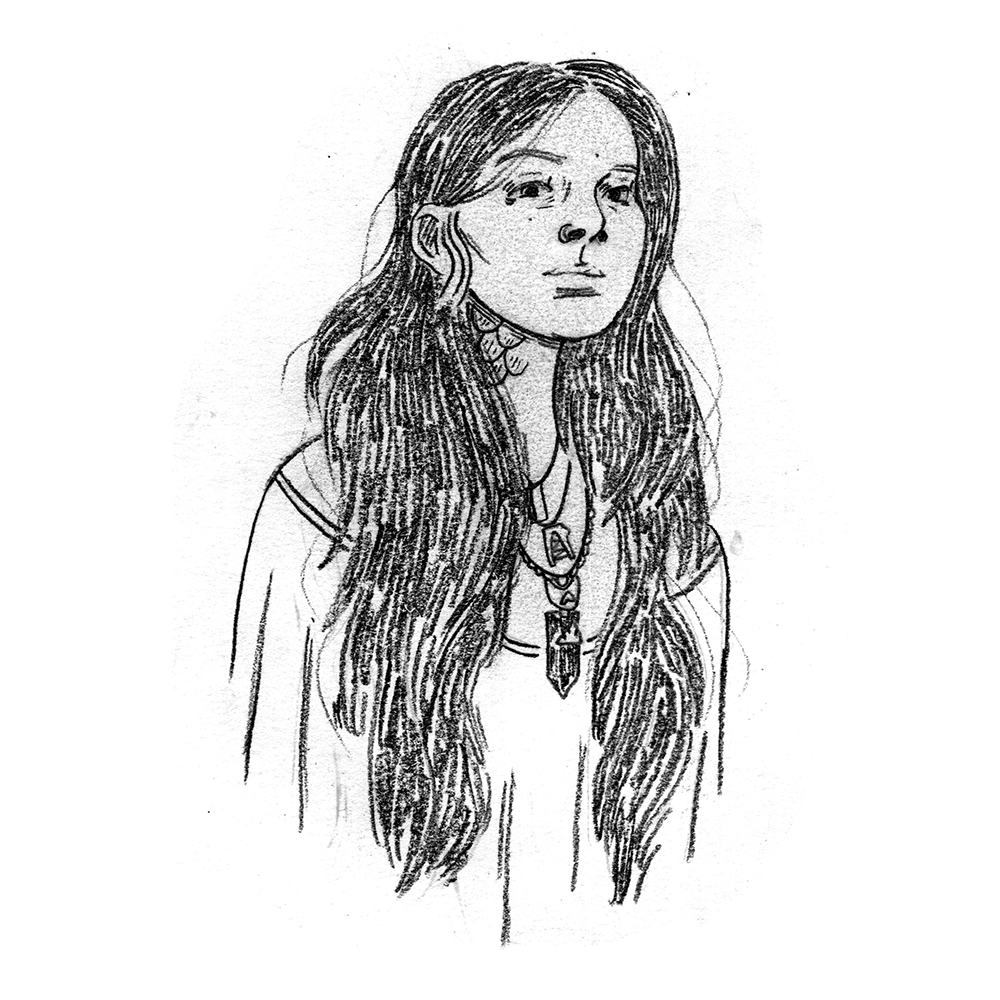
Kaupod ko an gasa han akon mga kaarugan.
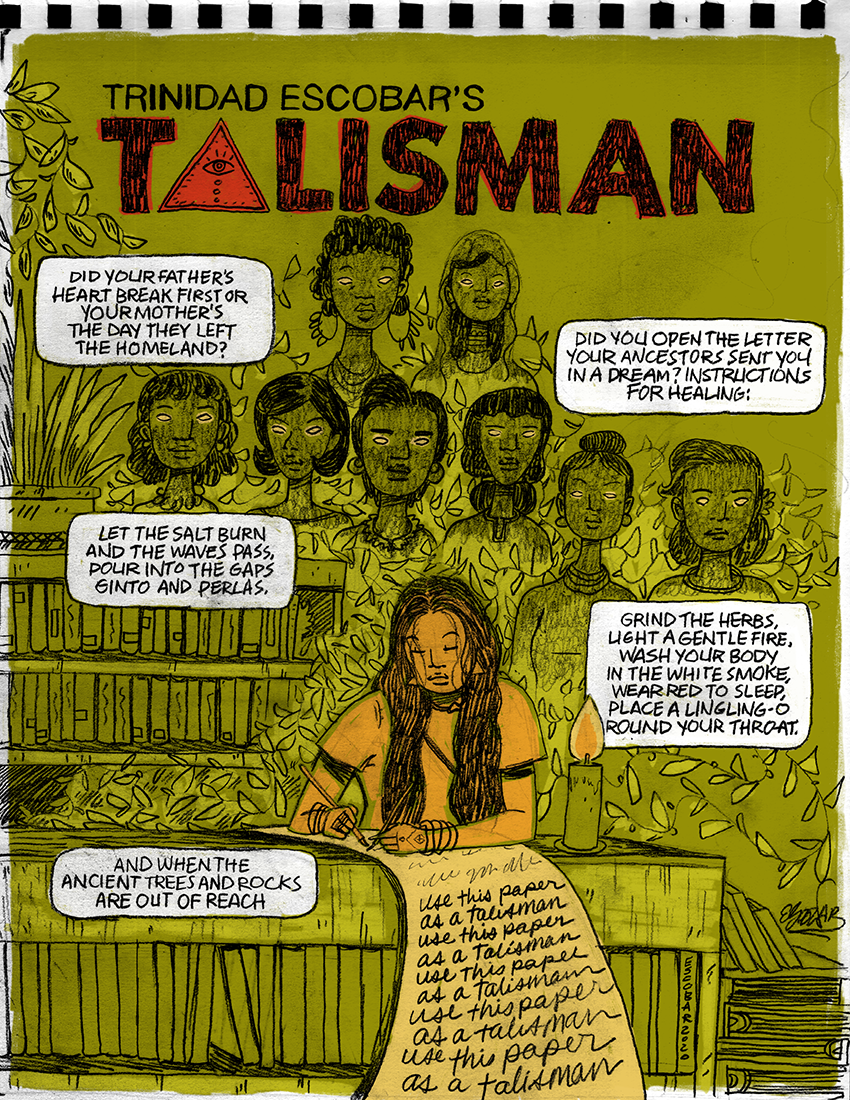
𓆝 𓆟 𓆞 𓆝 𓆟
Kita an kalibungan.
We are nature/the world/consciousness.
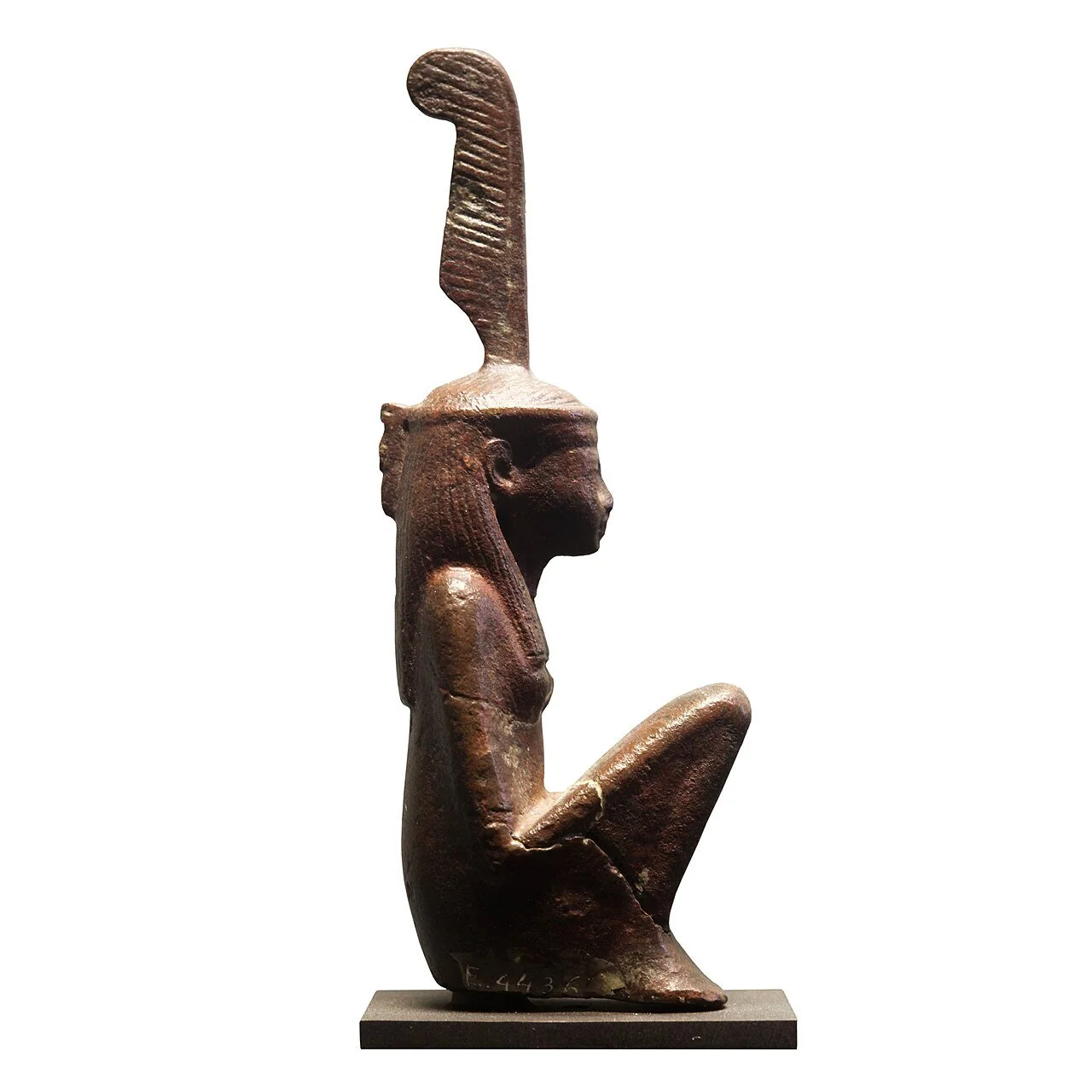
Ancient Egyptian goddess Ma’at with the ostrich feather of truth adorning her head, between 664 and 332 BCE. Trinidad likens this goddess to the personification of the Dharma.
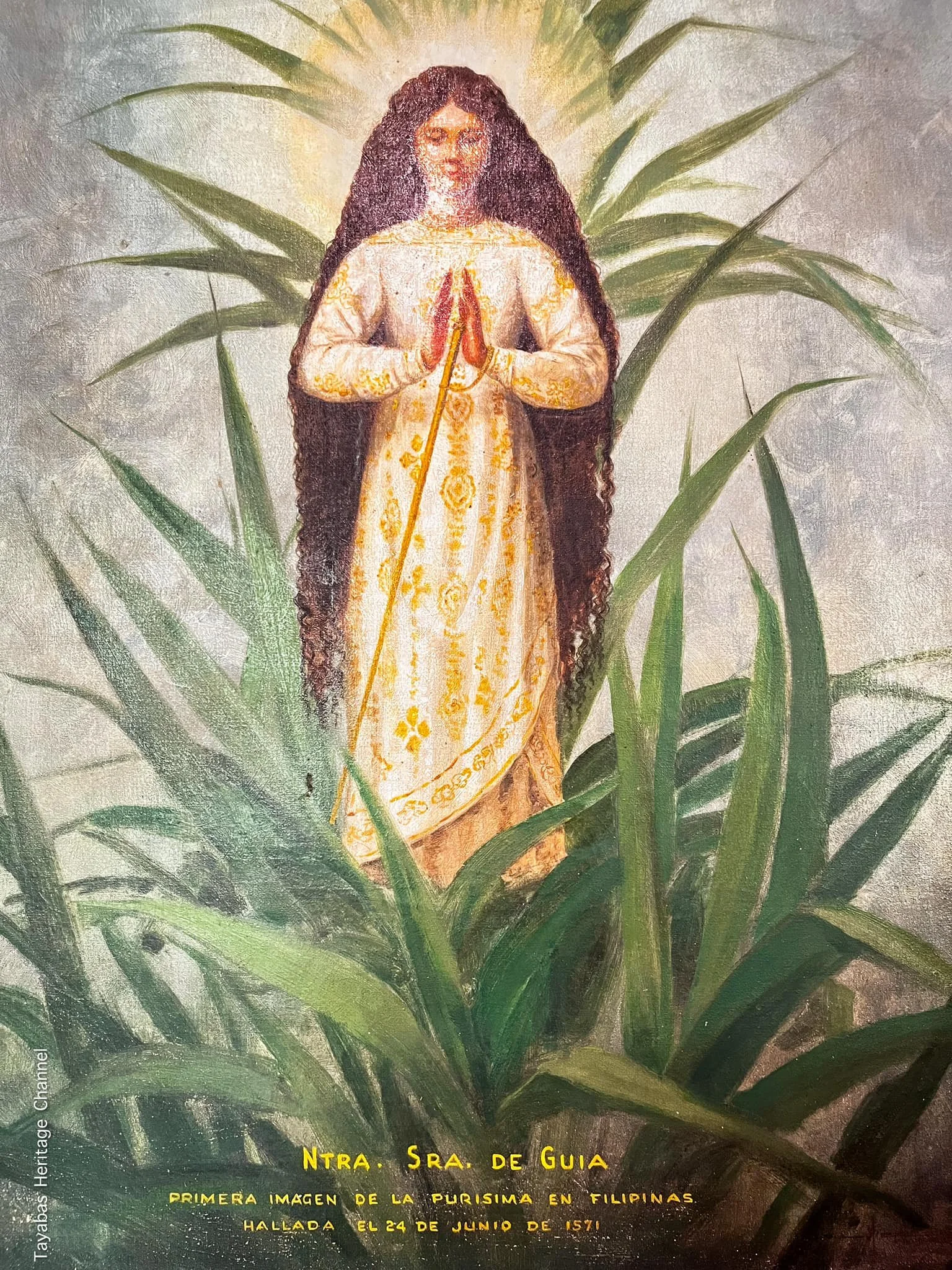
“What is hidden from you I will proclaim to you.” - Saint Mary Magdalene, The Gospel of Mary Magdalene, 120 AD.
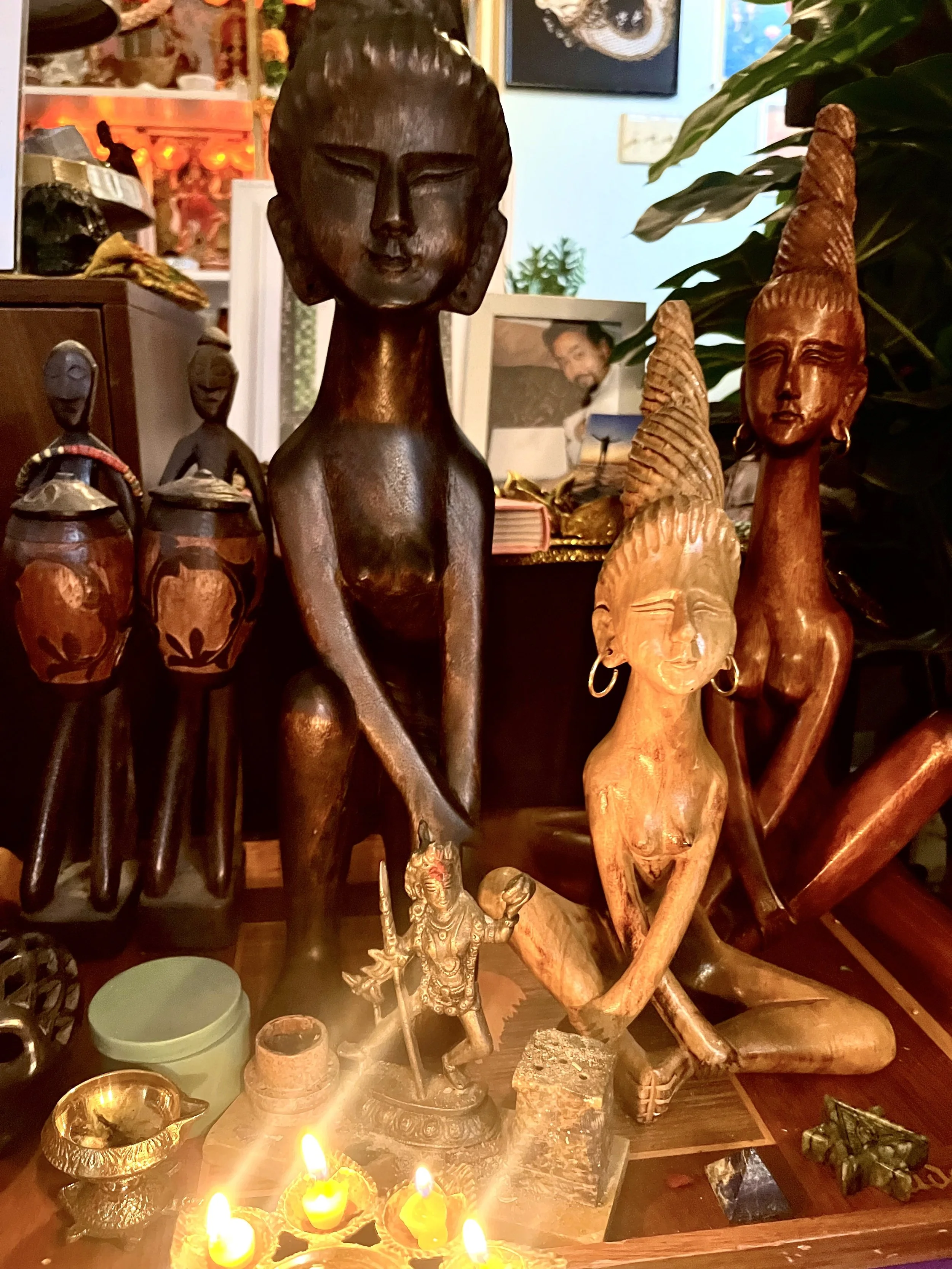
“या देवी सर्वभूतेषु शक्तिरूपेण संस्थिता ।
नमस्तस्यै नमस्तस्यै नमस्तस्यै नमो नमः ॥१२॥
Ya Devi Sarvabhuteshu, Shakti Rupena Samsthita
Namastasyai Namastesyai Namastasyai Namo Namaha”
A note for readers:
Trinidad is not a Buddhist nun or Catholic nun. She is not a shaman. Trinidad is a renunciate seer. She does not teach people outside of her family her secret practices. She does not seek to commercialize or commodify her family’s sacred knowledge for the sake of being cool or for money. She was born with a sensitivity, then she strengthened her sensitive skills over time with teachers, and later gained siddhis with guidance from gurus and years of meditation. She does share her knowledge of the Source, or God, and her findings of consciousness with people in her communities. Trinidad is not an ordained nun, healer, or indigenous shaman though some of her tacit knowledge overlaps. Baylan, Babaylan, Maaram, Dalagangan shamanic traditions should not be appropriated, commodified, and their knowledge should not be shared with unworthy people. Please continue reading with understanding, respect, and care.
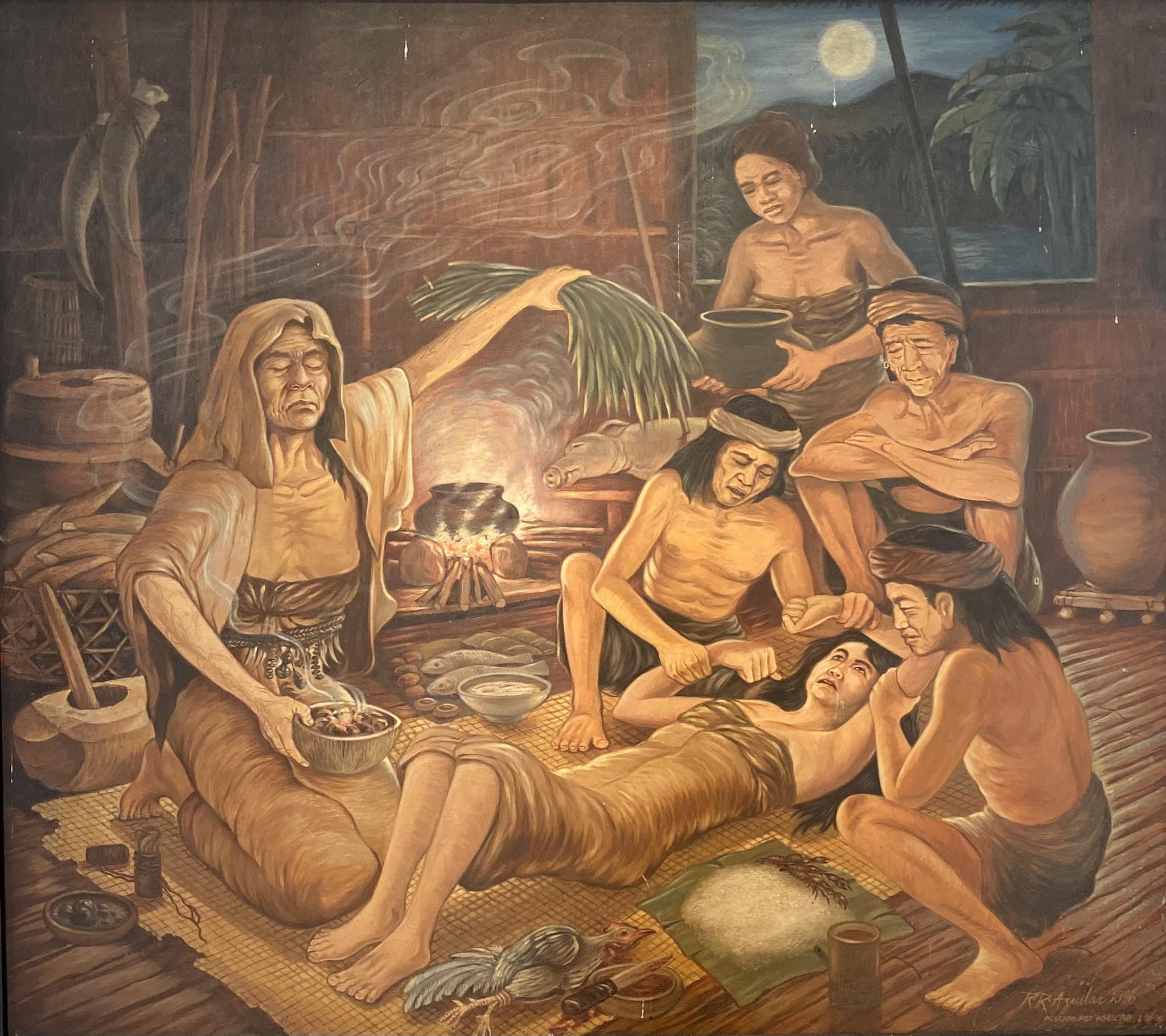
Ang Babaylan, painted by Roy Aguilar. This painting depicts one kind of diviner and healer in the Philippines. These leaders have sacred knowledge and are still living today.
Trinidad honors the revolutionary babaylan and dalagangan like Tamblot, Papa Isio, Dios Buhawi, Benedicta "La Santa de Leyte", Papa Faustino, Bunang, and Papa Pablo from Samar who fought against colonizers and missionaries to preserve what they could of our spiritual roots in the Visayas, ultimately sacrificing their lives for the Land her People.
𓆝 𓆟 𓆞 𓆝
Trinidad’s life as a devout Tantric is modeled after the Poets, Mahasiddhas, Yoginis, Upasikas, Rishikis like Vak Ambhrini; mystic bhakti poets like Karaikkal Ammaiyar, Andal, Mirabai, Lalleshwari, Anandamayi Ma; the renunciate Ani Ngawang Pema; Saints Francis and Clare of Assisi; and a Thai laywoman, the honorable Upāsikā Kee Nanayon.
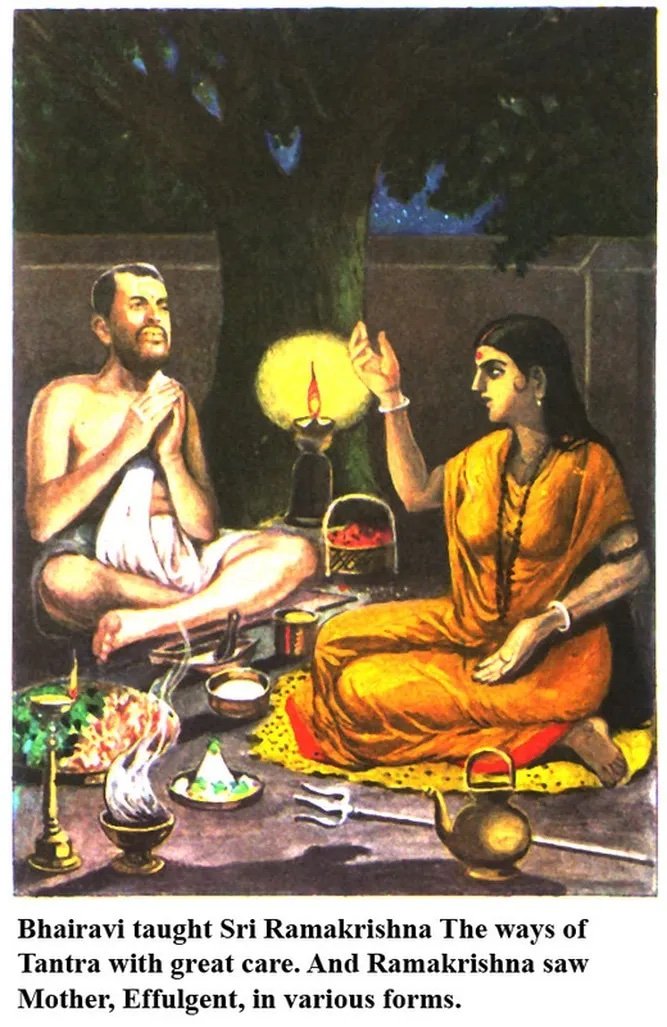
Image to the right: Bhairavi Brahmani, an orange-robed, middle-aged female ascetic initiates Ramakrishna to Tantra, 1861.
Trinidad’s Childhood
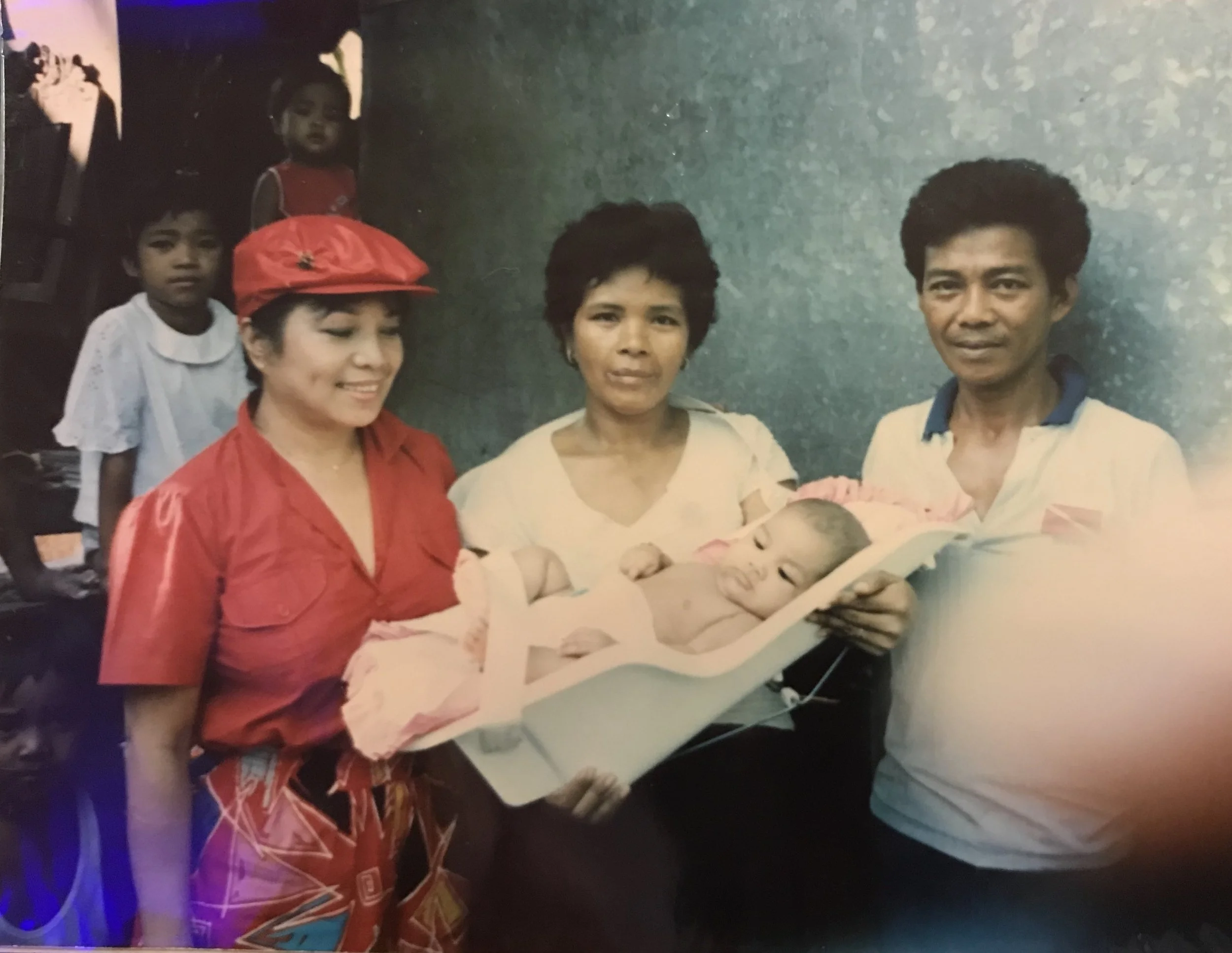
Trinidad’s adoptive mother (in red), a Tagalog woman living in the USA, with Trinidad’s birth parents Trining and Roberto, native Waray people displaced to Bataan. Trinidad is in the carrier. This was the day of Trinidad’s adoption.
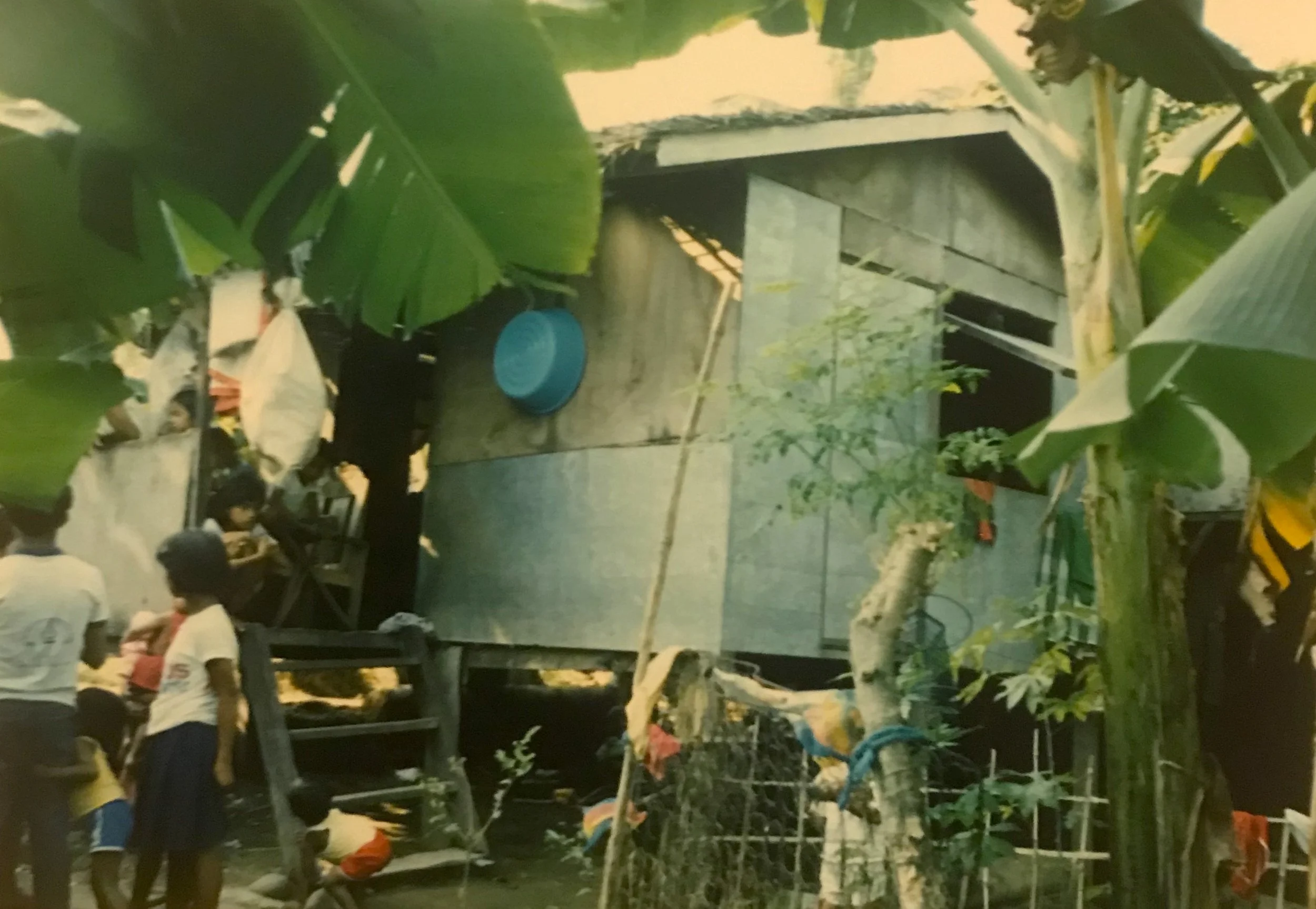
Trinidad’s childhood home in Balanga, Bataan.
ૐ Om muni muni mahamuni shakyamuniye svaha ૐ
The Land: Trinidad comes from a lineage of fisherfolk from the Visayan island of Samar. Since the late 1700s, her Waray family members have been displaced repeatedly due to massacres, natural disasters, war, imperialism, and poverty. She was born outside in a field in Balanga, Bataan during Super Typhoon Gading to Trining Tijones, a folk seer and sirena, and Roberto Dorognan, a fisherman from the Dolores river families in Eastern Samar. She was adopted and raised by the Diaz-Escobar clan, descendants of the Katipunero revolutionary (and, some say, traitor to the revolution) Valentin Diaz. Her Tagalog and Ilocano adoptive parents raised her on occupied Lisjan land.

Trinidad renounced the Catholic Church around the time of her First Communion in childhood after reading falsehoods within the bible, such as judgement and the instruction to punish women for various offenses in the Old and New Testaments. This went against the early spiritual experiences she already had as a young girl. As a nonverbal, Autistic child she communicated directly with the Land and spirits; she learned that she was a seer. Much of what she learned from her visions contradicted the religion in which she was raised. Trinidad endured visions of animals, women and children, the earth suffering at the hands of men whose only interest was ever-lasting power. She witnessed abuse in her families and communities, reverberations of the violence of Empire. Imperialist and colonial histories of the global south also prevented her from embracing the Church; she viewed the Church as a tool for resource exploitation and oppression by the elite against the global south.
Separated from her homeland and culture due to colonization, imperialism, martial law, poverty, adoption, she decided to explore the spiritual realm on her own to find answers about life and suffering, following in the footsteps of ancient Tantric and Gnostic practitioners of centuries past. Studying Dharmic religions and mystic sciences helped her understand how the universe and the Self are constructed. Following the evidence around her and the Source within her she later reconnected directly to the Gnostic message of the Holy Spirit, or Sophia, and her emanations as The Virgin Mary-Jesus-Mary Magdalene. She views true followers of the teachings of Jesus (not the Roman Catholic Church) as bhakti yogis.
Trinidad’s difficult childhood, disabilities, near-death and spiritual experiences have led to a full life of love and peace.
𓆝 𓆟 𓆞 𓆝 𓆟
Poet-seers often live lives of chronic pain. Trinidad was a nonverbal child who later developed hyperlexia and situational mutism. She also experienced periodic catatonia and fainting, often collapsing at school and at home. As a disabled adult she still deals with these traits and other physical limitations. She hopes to dismantle misconceptions about disabilities, especially modern, materialist re-tellings of the ancient Autistic experience.
𓆝 𓆟 𓆞 𓆝 𓆟
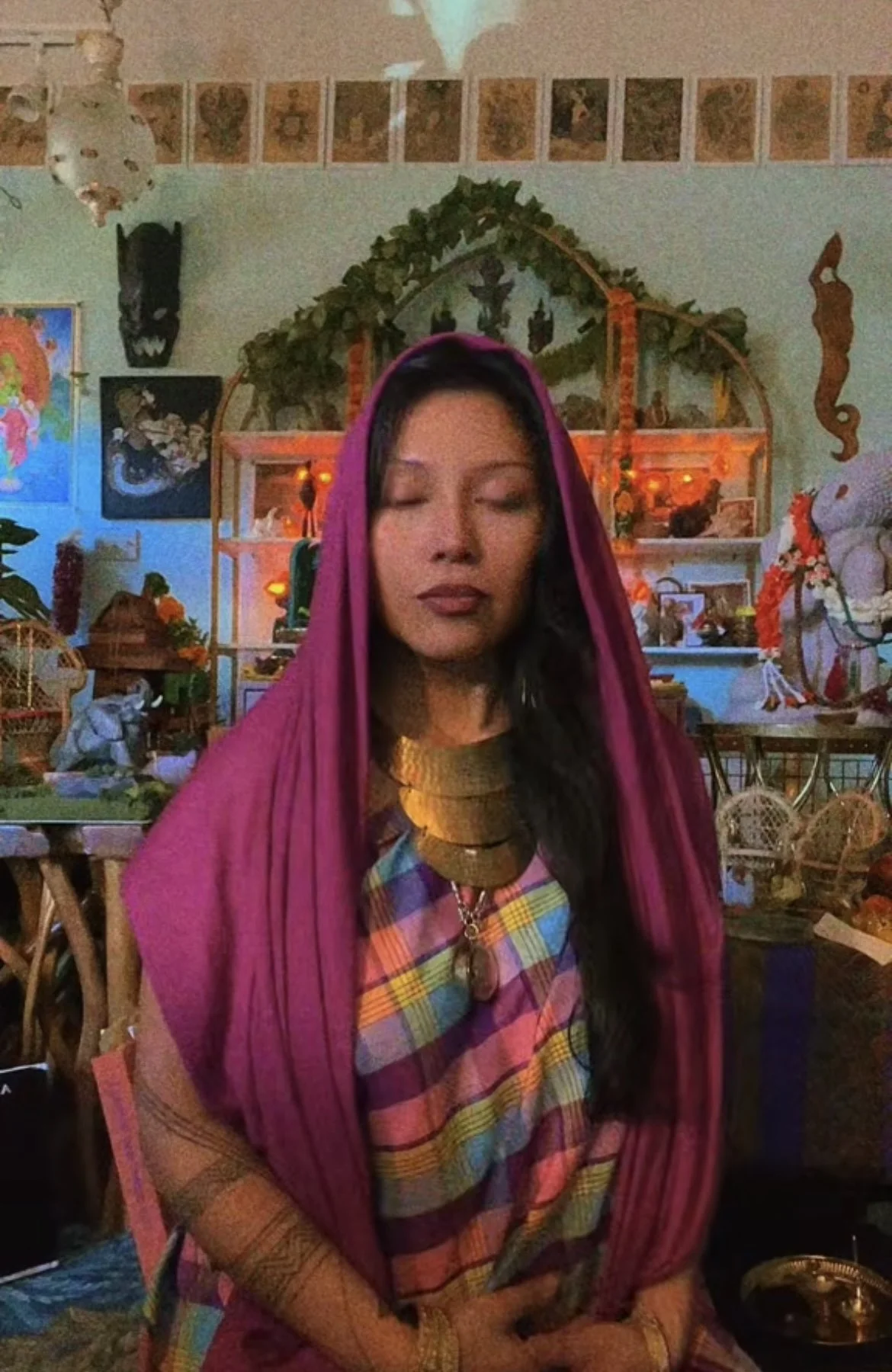
In childhood Trinidad had a guardian and guro on the other side, also called an abyan in the Philippines. When she was eight years old the abyan showed her how to make an altar and connect to the Source. Criticized by adoptive family members for being too sensitive, her abyan showed her how to make use of this sensitivity or Divine Spark within her, and the aether that seemed to contain information, or the Dharmakaya, all to the horror of her Catholic family who believed she was possessed. The abyan guided her on the limbs of yoga, intuition, mindfulness, and, later, spirit communication. She spoke to her first spirits besides her abyan by the time she was thirteen. She experienced visions of two ‘past’ lives by the time she was sixteen revealing experiences of animist devotion and faith. Trinidad endured years of discrimination and painful alienation from her Catholic and atheist adoptive family and friends who simply did not believe her.
𓆝 𓆟 𓆞 𓆝 𓆟
Trinidad’s adoptive mother beat her for her many instances of supposed rebellion or spiritual possession. Trinidad attempted suicide for the first time when she was sixteen years old leading to her first near-death experience (NDE). “Returners from death”, or delogs, are often ostracized until they meet other delogs. She was committed to a mental health clinic for observation and released after less than one day. Trinidad had her abyan, Plato’s Allegory of the Cave, her birth mother, and the poetry of seers before her to help her make sense of everyone’s reactions towards her. She was only affirmed later in adulthood when she found her gurus and fellow yoginis.
She began collecting books on a wide array of occult and sorcery subjects in childhood and by the end of her thirties amassed over 3,000 books in a personal library which she later catalogued. She was searching for external evidence that validated her internal experiences, and found that evidence in the teachings of the saints and meditation masters.
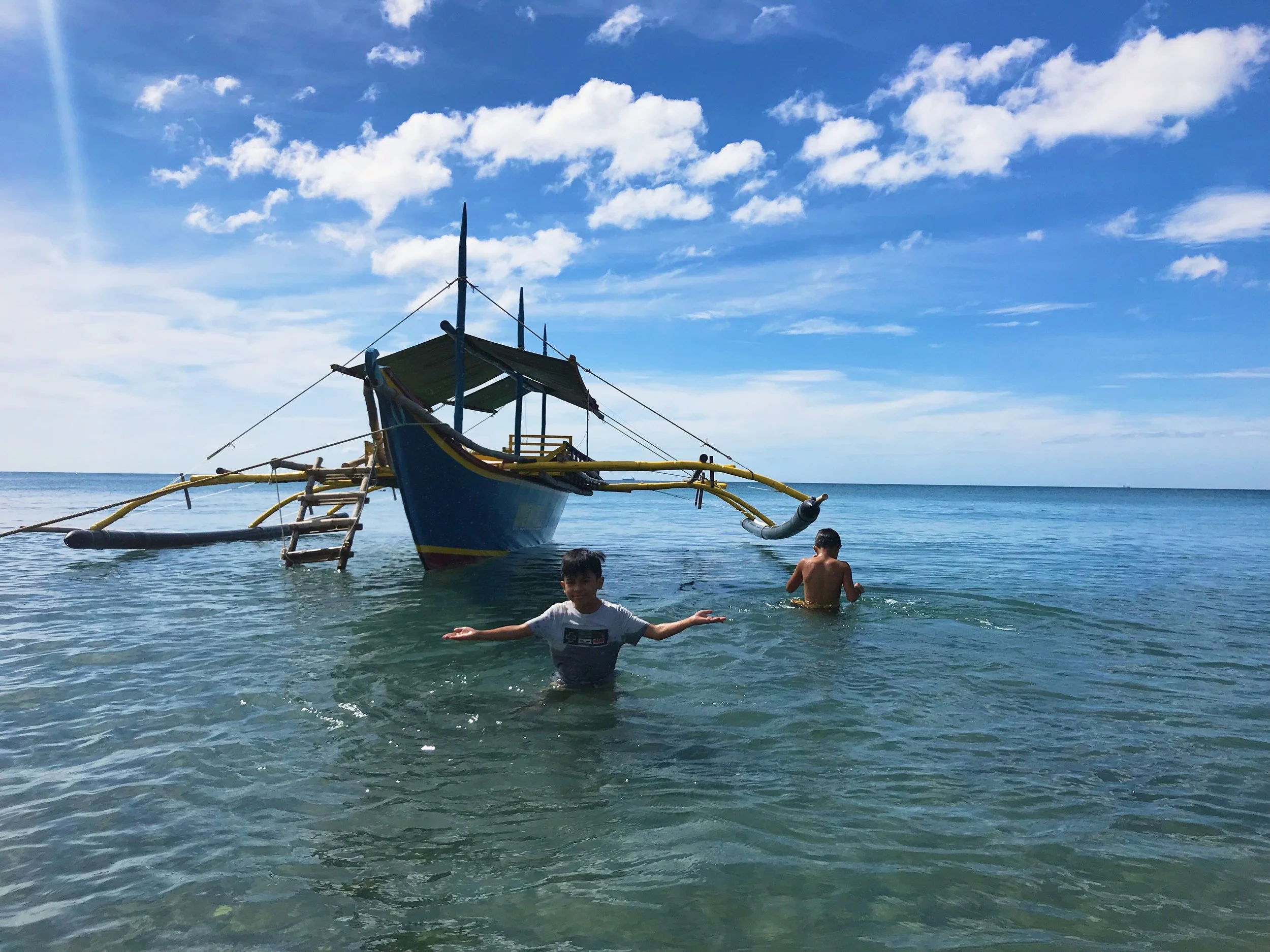
Trinidad’s son (also Autistic) with their family’s fishing boat in Bataan.
After years of disciplined study and practice Trinidad pieced together the savant aspects of her disabilities with her relationship to the spirit world. Her efforts to decolonize her life (to rematriate herself to the Land) naturally included a healthy examination of the spiritual practices that she grew up with and practices that better suited her visions of collective liberation via self-realization. Archaic and ancient Sumerian, Egyptian, Indian, Islamic, Persian, Greek, and Mayan explorations of reality and consciousness; Southeast Asian folk practices and witchcraft; poetry, psychology, physics, and quantum mechanics all helped her solve the puzzle of her savant traits— traits that are rarely studied in children and people of color.
𓆝 𓆟 𓆞 𓆝 𓆟𓆝 𓆟 𓆞 𓆝 𓆟
Trinidad’s Later Years and now
𓆝 𓆟 𓆞 𓆝 𓆟
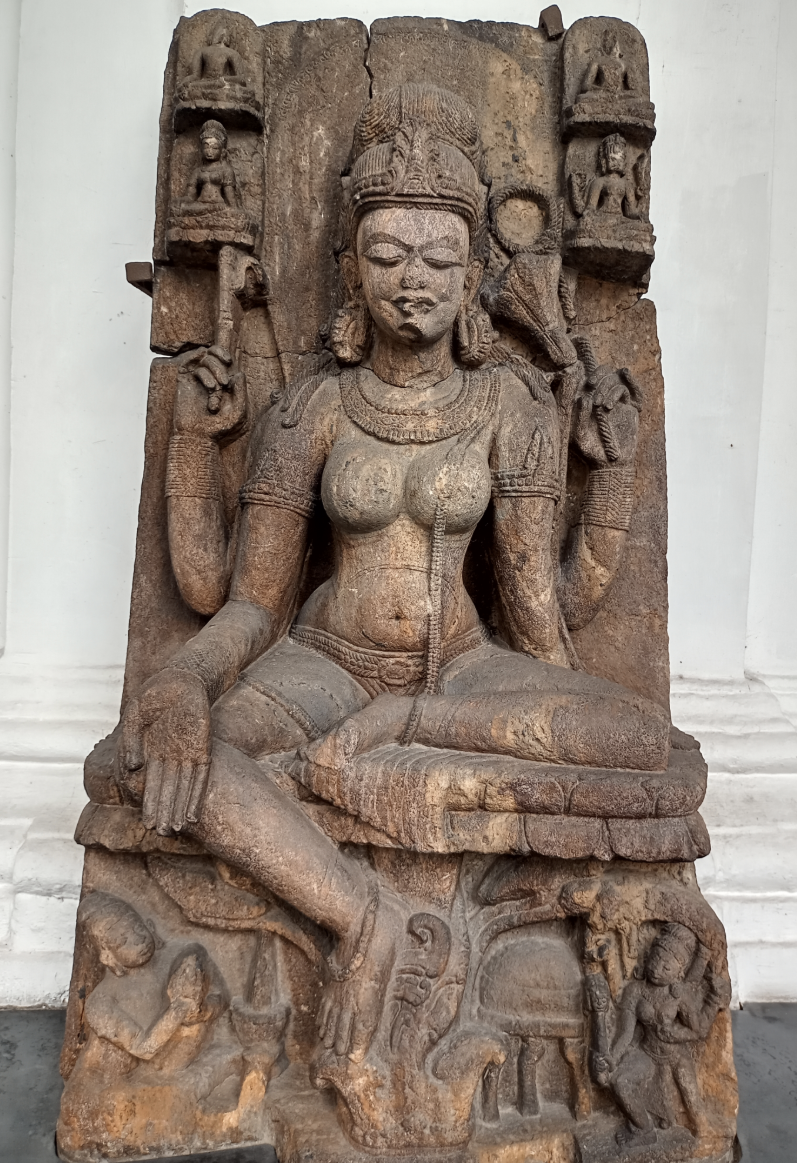
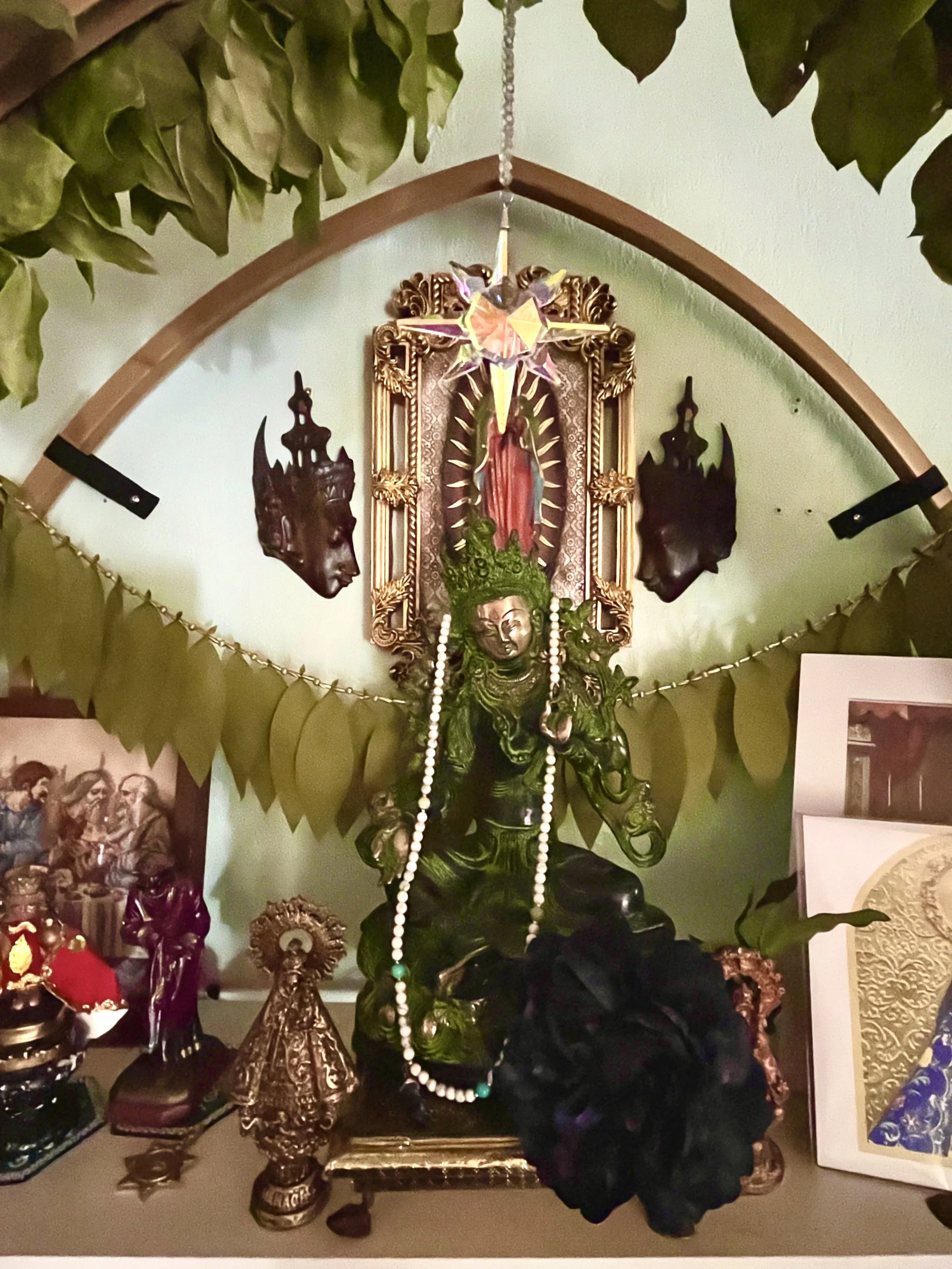
Mahavidya Tara, Indian Museum, Kolkata, India. Trinidad worships God as The Great Mother in Buddhism, or the genderless, primordial Dharmakaya. The Dharmakaya is sometimes personified as Samantabhadra (masculine) and Samantabhadri (feminine) together, sometimes compared to Shiva-Shakti. She is a bhakti of the bodhisattvas Avalokitesvara (Compassion) and Prajnaparamita (Wisdom) in their cosmic emanation form of Tara (Mother of Liberation). She first “met” Tara as a child.
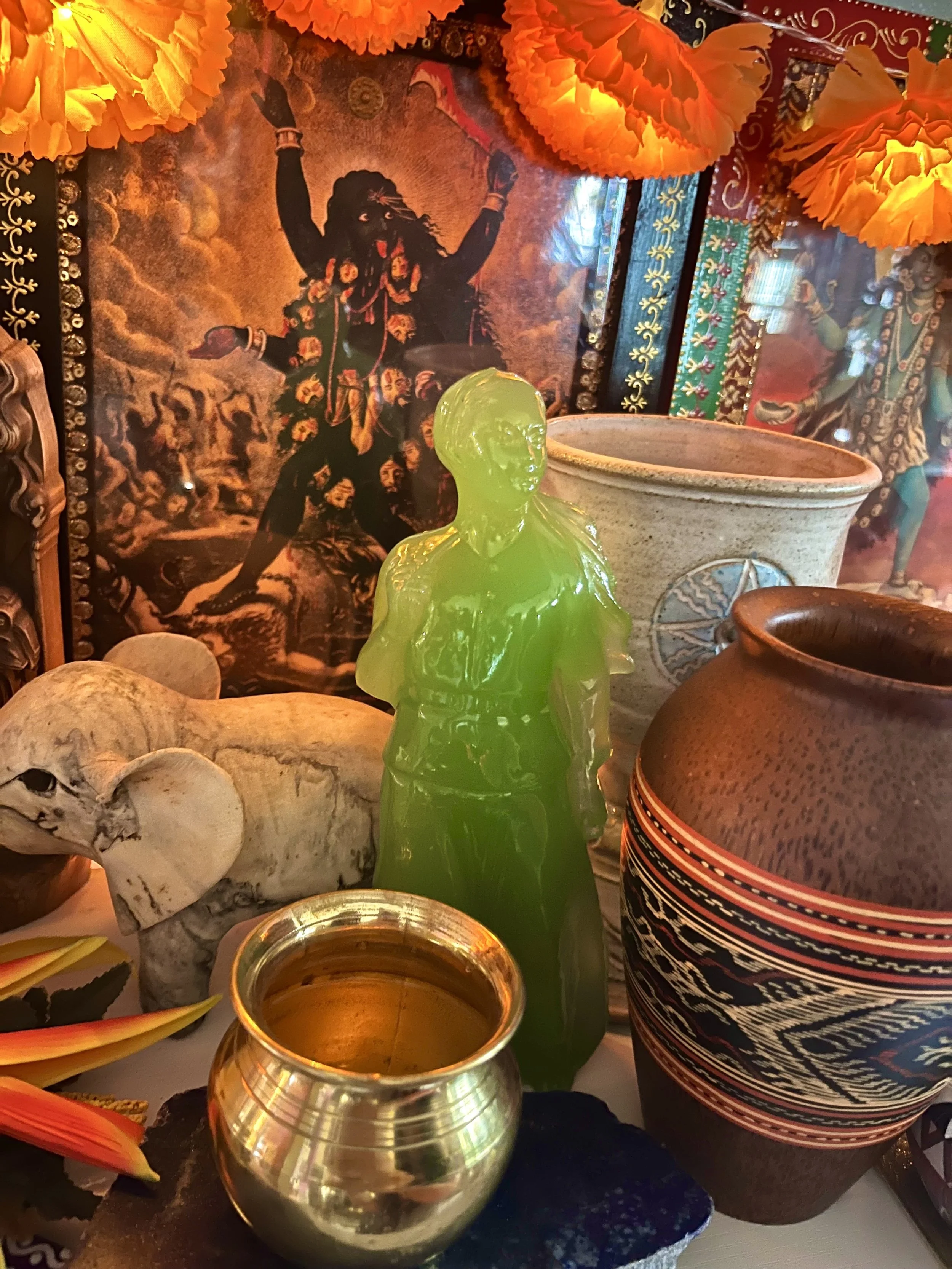
Trinidad has crossed paths with a diverse sea of wise people over the years: elder kitchen witches, bone-setters and diviners, curanderas and root workers throughout the U.S. South, Filipino hilots and herbalists, Hindu-Buddhist laypeople, homeless and disabled people with astonishing experiences. She learned that there are many paths to the Source, to healing. As a budding poet-seer, she studied spirit boards, cartomancy using playing cards, reading tea leaves and other kinds of divination. Then she moved on to more advanced studies as her abyan and the Source guided her.
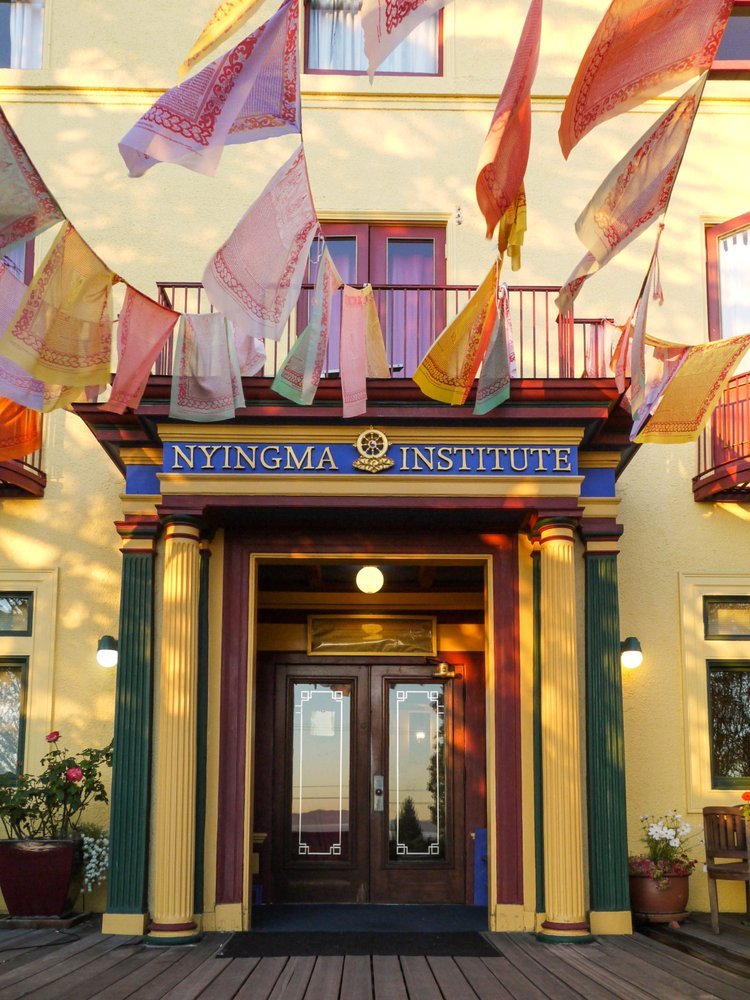
The Nyingma Institute in Berkeley, California.
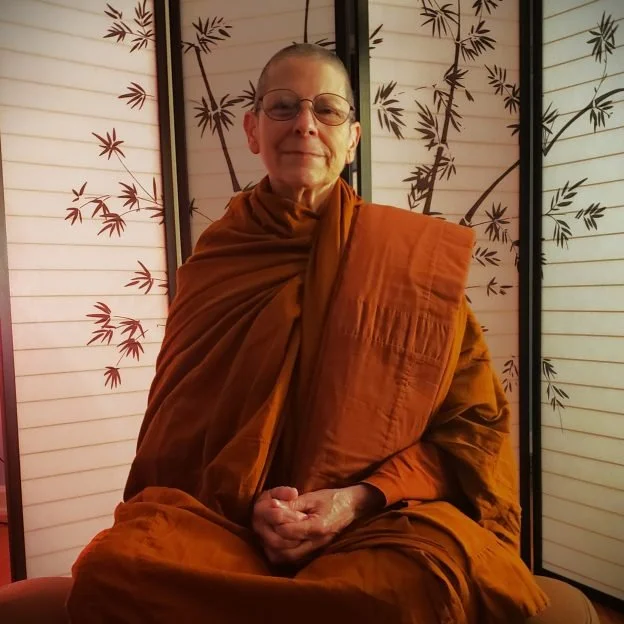
Gurus
Her gurus are of the ancient Vajrayana Nyingmapa lineage that begins with Vajrasattva, Vairocana, The Five Tathagatas like Amitabha, Garab Dorje, Guru Padmasambhava, Yeshe Tsogyal, Longchenpa. She took her first Refuge vows at Orgyen Dorje Den in Alameda, Wat Tepnimit in Modesto, and also Wat Buddhanusorn in Fremont. She studied at the Buddhist arts school Naropa and later continued her Dzogchen and Tantric studies, focusing on the academic aspects Chöd and the application of Kum Nye, at the Nyingma Institute under teachers like Lama Palzang and Pema Gellek. She briefly studied indigenous energy systems and weapons combat, Didya Mudgara, with Ka Virgil Mayor Apostol at his Kailukuan School of Indigenous Science and learned from Visayan culture bearers like Khokhoi at Kalami Spirit Arts. She took additional Buddhist Refuge vows and Precepts with the Venerable Ayyā Mārajinā Therī, a Cuban-American Theravada bhikkhuni.
Trinidad’s family converted part of their small home into three living shrines called Cavern House. She focuses on the practices of Tantra, Dzogchen, Gnosis and Sufism.
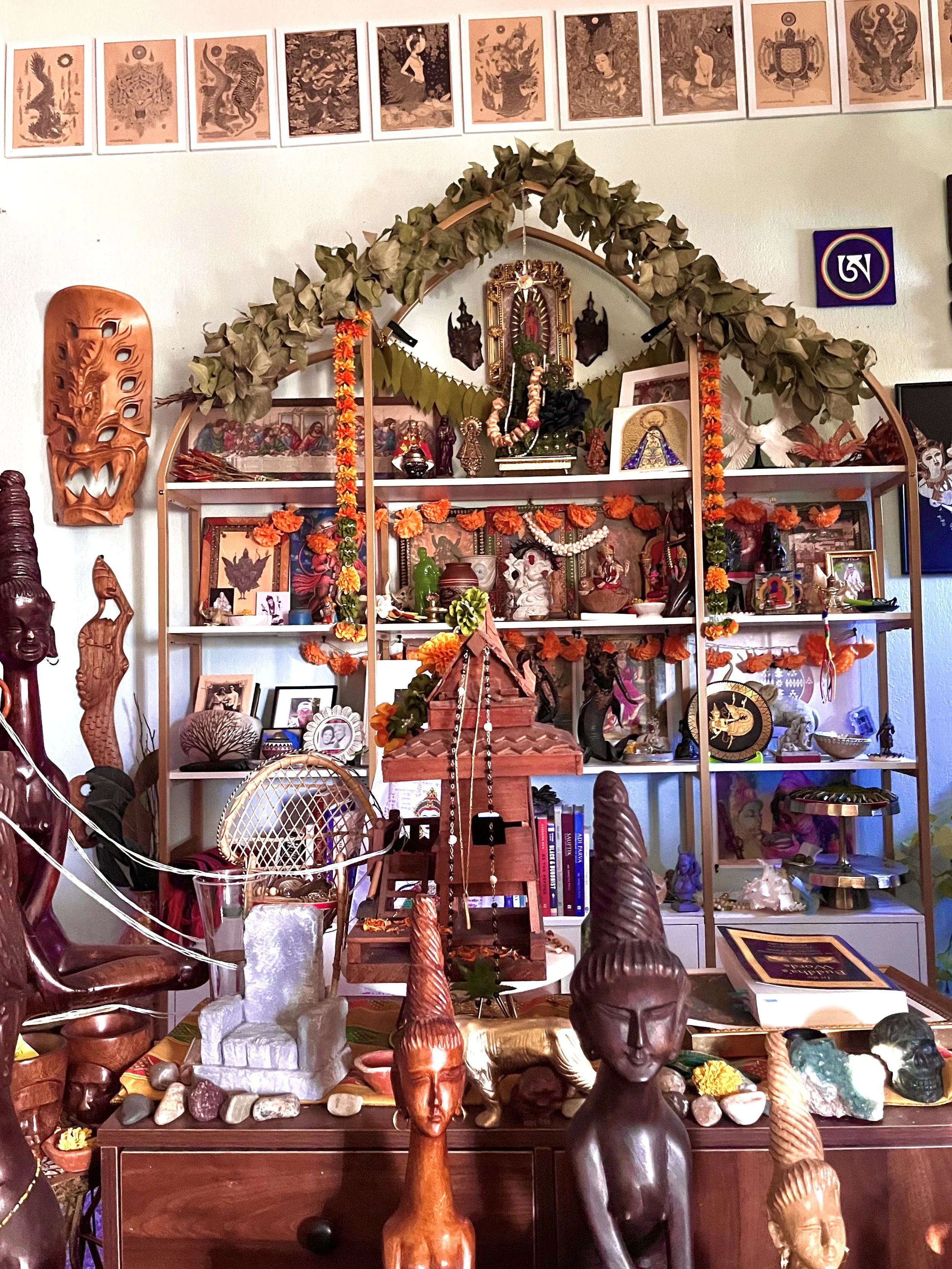
Trinidad spends her days in a near-constant state of samadhi and lectio divina, drawing, writing, meditating, studying, and performing rituals on behalf of the oppressed and marginalized, and all living beings. She is joined by her yoginis and family. She is a sangha supporter of the Bhikkhunis at the Dhammadharini Monastery in Northern California and other monasteries and sitting groups in the Philippines, Sri Lanka, Thailand, and beyond, though most of her practice requires solitude.
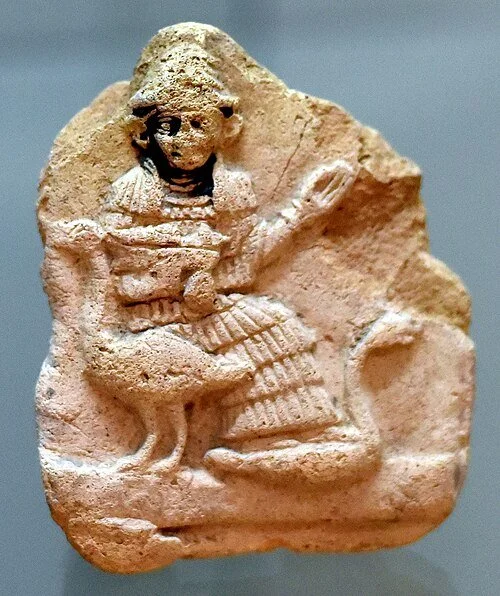
Trinidad applies her Tantric and Gnostic practices to ancient deities like Inanna and Nanshe. Tara and Nanshe are both aspects of Compassion, liberation, and prophecy.
“Tayo gumagawang himala, Tayo gumagawa ng mga sumpa, at ng mga Diyos!
(We make miracles, we make curses, we make Gods)
”

9th–10th century CE granite Chola statue of Matrika Maheshvari, Guimet Museum, Paris, France
Trinidad gives her deep gratitude to the great Rishis and the nameless laypeople who accessed ancient Vedic wisdom and then contributed this wisdom to Tantric scholarship throughout Southeast Asia. She bows humbly to the the mystics of all traditions. She expresses tremendous reverence for the saints around the world who illuminated her path: Enheduanna, Plato, Homer, Euripides, Sappho, Dante, the many Pythia of Delphi and all sibyls, Maximus the Confessor, The Sages Vasistha, Patanjali, Saint Agastya, Bodhidharma, The Sufi poet-seer Rumi, Acarya Brahmananda Giri, Bisheykyapa, Kaulacarya Anandanatha, Raja Ramakrishna, Acarya Moksadananda, Kailasapati Baba, Bamakhepa, Saints Francis and Clare of Assisi, Saint Lucy, Saint Mary Magdalene (and other saints of Christian lineages like the Syrian Saint Simeon), Anandamayi Ma, Sri Swami Kanakananda Brighu, Swami Gitananda Giri, Siddhar Bhagya, Kahlil Gibran, Credo Mutwa, His Holiness the Dalai Lama, Thích Quảng Đức, Dr. Walpola Piyananda, Sri Brahmananda Sarasvati in San Francisco. Trinidad’s favorite thinkers who were, in their own ways poet-seers, or accidental mediums: Victor Hugo, Immanuel Kant, Walt Whitman, Leo Tolstoy, Herman Melville, Harriet Tubman, Emily Dickinson, Nikola Tesla, Octavia Butler, Ray Bradbury, Philip K. Dick, Frida Kahlo, and more. Her favorite healers and teachers include grandmothers and mothers like her own Nanay and Aisenia de la Cruz, many overseas Filipina workers who work as maids and nannies including her sisters and nieces, her Tita Lucy who was an Autistic seer and Carmelite nun, local witches and Tantric yoginis like Angela Angel, Yeshuani, Lolo Lavish, La’Arni Ayuma, Ka Virgil Mayor Apostol, Kumare Khokhoi de La Vida at Kalami Spirit Arts. Some of Trinidad’s most valued spiritual teachers were nonverbal disabled people that she worked with as an independent skills coach and supported living aid.
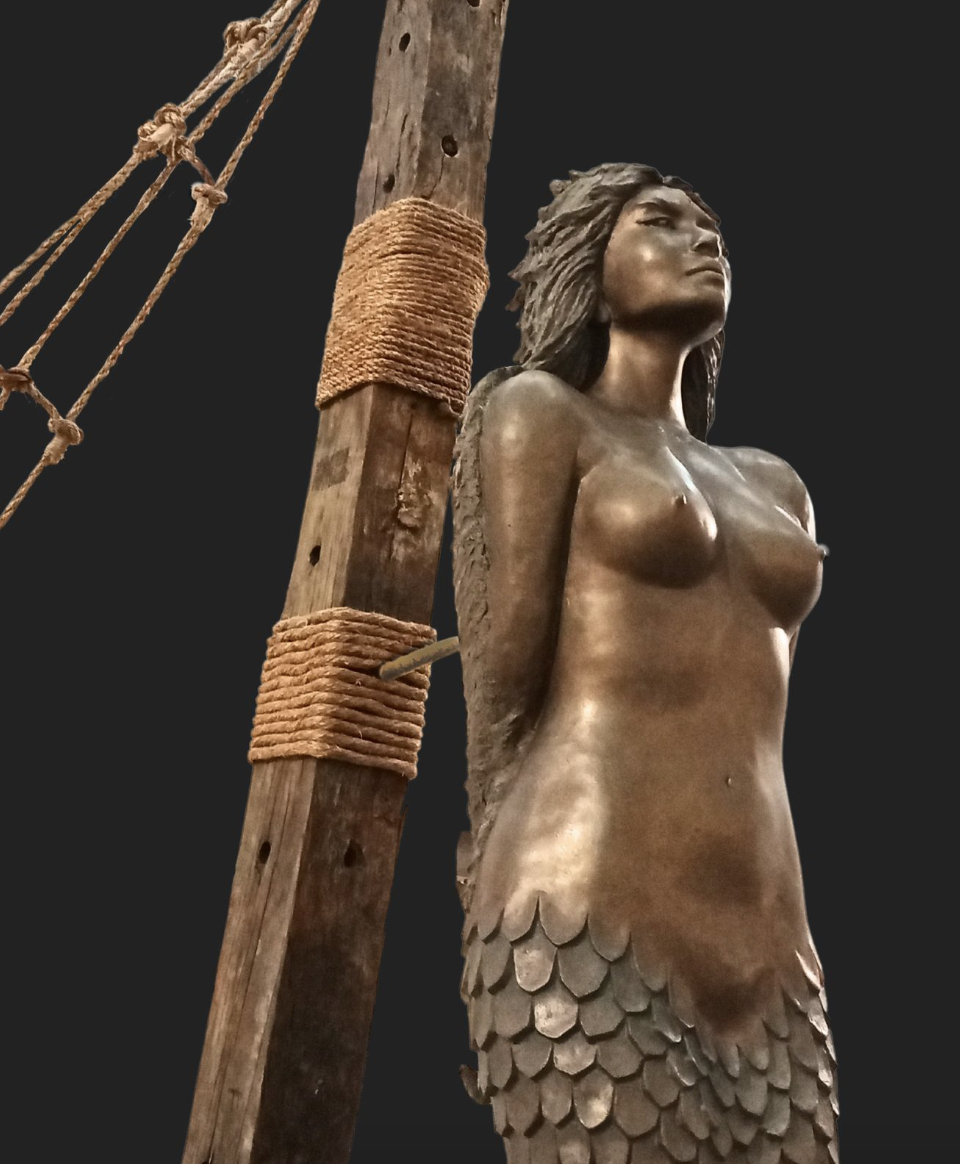
Study for the Figurehead of the Galleon Angel de la Guardia (a.k.a. Magwayen) 2024, by Agnes Arellano. Trinidad likens Magwayen with Guanyin, an emanation of (or a Bodhisattva similar to) Avalokitesvara.
Trinidad used to share her knowledge of death and communication with spirits at her art workshops. She attends few public events these days. Now Trinidad meets with artists and art students by word of mouth to discuss matters of art, ritual, pain, spirituality, and social justice. She uses her siddhis on behalf of adoptees, young mothers, neurodivergent disabled people, incarcerated and formerly incarcerated people, Autistic adults and children, homeless and working-class LGBTQ people, and people who struggle with suicidal ideation and recovery.
She does not market, sell, or profit from her sacred knowledge.
𓆝 𓆟 𓆞 𓆝 𓆟𓆝 𓆟 𓆞 𓆝 𓆟
𓆝 𓆟 𓆞 𓆝 𓆟
Jesus said, "This heaven will pass away, and the one above it will pass away. The dead are not alive, and the living will not die. In the days when you consumed what is dead, you made it what is alive. When you come to dwell in the light, what will you do? On the day when you were one you became two. But when you become two, what will you do?" - The Gospel of Thomas, Gnostic Text, 100 AD.

“When you are a sangoma (a South African traditional healer),
your life ceases to be your own.
When you are a sangoma, you stop becoming an ordinary human being,
Instead you become a lonely pilgrim traveling that strange grey road
between the known and the little known,
between the visible and the invisible,
between the mysterious and the crushingly ordinary.
When you are a sangoma you do not look for trouble.
No self-respecting sangoma does.
But trouble finds you, people come to your doorstep bringing ordinary complaints
of which you can deal, but sometimes can bring strange mysteries to the doorstep
Of your life, mysteries that change your life forever.”
-Credo Mutwa on seeing interdimensional and extraterrestrial beings throughout the continent of Africa.
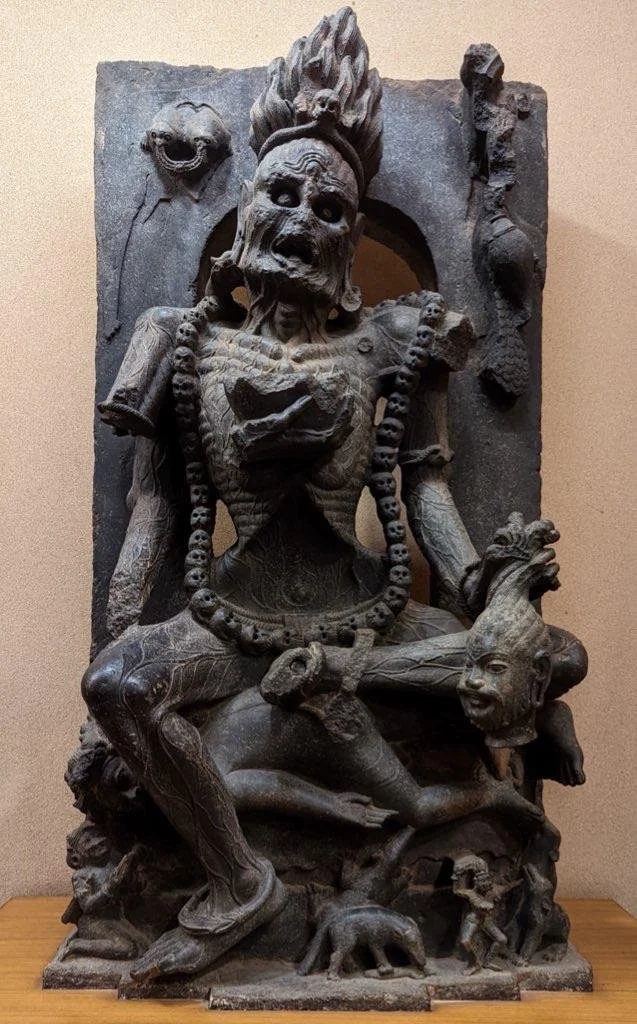
8th century, The Matrika Chamunda at the Odisha State Museum in Bhubaneswar, Odisha
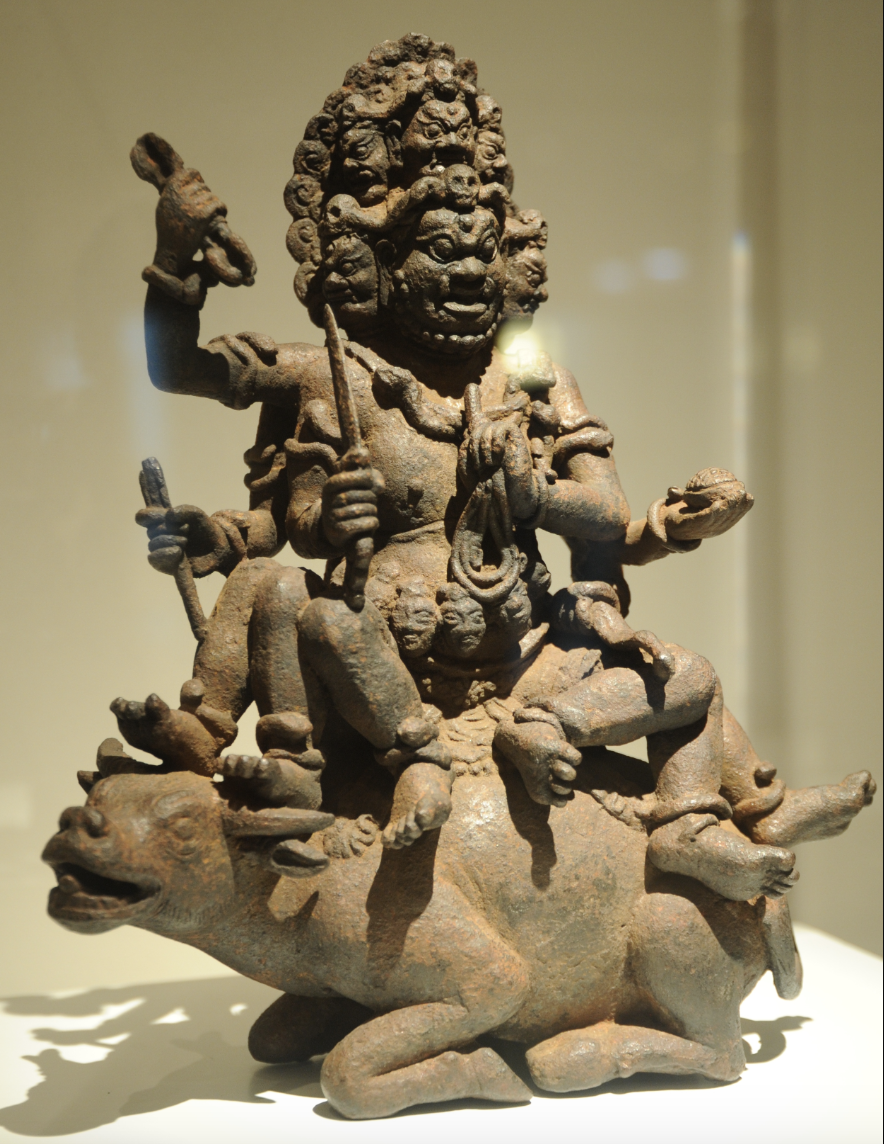
Yamantaka, Fear-Striking Vajra, Destroyer of Death (Tibetan: Gshin-rje-gshed), Tibetan Esoteric Buddhism, Art Institute, Chicago.